Spray Foam Insulation Ayer MA - Quick Facts
Local energy code in Ayer
- Ayer enforces the Massachusetts Stretch Energy Code for new construction and major renovations. IECC Climate Zone 5A.
- Massachusetts has three energy-code levels - base (2021 IECC), Stretch, and Specialized (Opt-In) - and Ayer is on the Stretch Code.
Insulation & air sealing in Ayer
- Spray foam is one of the fastest ways to hit the 3.0 ACH50 blower door target and the HERS 42/45 scores required in Ayer.
- Envelope R-values follow IECC Climate Zone 5A (roughly R-49 to R-60 attic and R-20+ walls).
- Open-cell and closed-cell assemblies are evaluated during HERS plan review; as RESNET raters, not an insulation contractor, we give unbiased guidance on where R-value and air-sealing dollars move your score most.
2026 Mass Save incentives in Ayer
- Better air sealing and insulation move projects into higher Mass Save tiers - up to $25,000 for a new all-electric single-family home and up to $30,000 (Level 2) for all-electric renovations - verified by a RESNET-certified HERS rater.
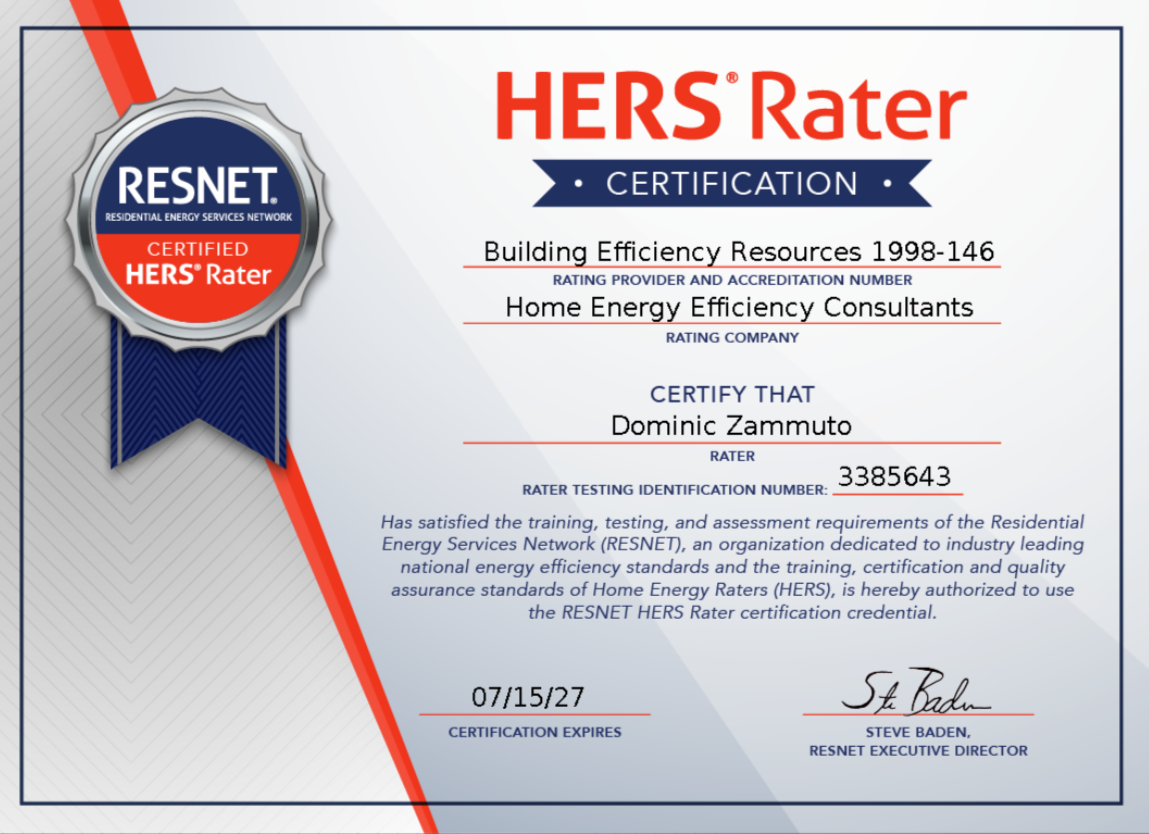
RESNET-certified · 15,000+ ratings completed · 5.0 stars across 136 Google reviews · (617) 501-6788
Ayer Spray Foam & Insulation
Ayer sits in IECC Climate Zone 5A, so a well-insulated, air-sealed home is essential for comfort and cost. We plan and support insulation work on a mix of colonials, capes, ranches, and newer construction.
Which Spray Foam Is Right for Your Project?
Spray foam comes in two families, and the right choice shapes both performance and cost on a Ayer project.
Closed-Cell Spray Foam
Dense and rigid at roughly R-6 to R-7 per inch — the highest R-value of common insulation. It also acts as an air and vapor barrier and adds stiffness, making it ideal for rim joists, basements, crawlspaces, and roof decks in Ayer homes.
Open-Cell Spray Foam
Lighter and vapor-permeable at about R-3.5 to R-3.8 per inch. It expands to fill irregular cavities, seals air leaks, and dampens sound — a strong choice for interior walls and attics where drying potential matters.
Insulation Types & R-Values Per Inch
R-value measures resistance to heat flow — higher is better. Here is how the insulation materials used on Ayer, Ayer projects compare per inch of thickness.
Fiberglass blown-in
Loose-fill for open attic floors; fast to install and settles into an even blanket over large horizontal areas.
Polyiso rigid board
The highest-R rigid foam board; foil-faced and used for continuous exterior insulation to stop thermal bridging.
Open-cell spray foam
Lighter and vapor-permeable; expands fully to fill irregular cavities, seals air leaks and dampens sound. A common choice for interior walls and vented attics.
Wood fiber
Renewable, carbon-storing batts and boards with strong sound dampening and vapor-open performance.
Closed-cell spray foam
The highest R-value of any common insulation; also acts as an air and vapor barrier and adds structural rigidity. Ideal for rim joists, basements, crawlspaces and unvented roof decks.
Mineral wool (rock wool)
Dense, naturally fire-resistant and water-repellent batts or boards with excellent sound control; keeps its R-value when wet.
Cellulose (dense-pack)
Recycled paper fiber treated for fire and pests; dense-packs into closed wall cavities, making it ideal for retrofits.
EPS rigid board
Expanded polystyrene; the most affordable rigid foam, used for continuous exterior and below-grade insulation.
Fiberglass batts
The most common and economical insulation; must be cut and fitted carefully because gaps and compression sharply reduce real-world performance.
XPS rigid board
Extruded polystyrene; moisture-resistant rigid board common under slabs and on foundation walls.
Insulation for Ayer Homes
Ayer is located in Ayer, in IECC Climate Zone 5A. Its housing includes a mix of colonials, capes, ranches, and newer construction, which means improving comfort and cutting energy bills through better insulation and air sealing is a priority for local property owners. The right insulation strategy depends on the age and construction of each home.
Massachusetts Insulation R-Value Requirements
Ayer falls in IECC Climate Zone 5A. New and renovated homes must meet these minimum insulation levels under the Massachusetts energy code.
| Assembly | Minimum R-value (Zone 5) |
|---|---|
| Wood-frame walls | R-20, or R-13 cavity + R-5 continuous |
| Ceilings / attics | R-49 to R-60 |
| Floors over unconditioned space | R-30 |
| Basement walls | R-15 continuous or R-19 cavity |
| Crawlspace walls | R-15 continuous or R-19 cavity |
| Slab edge (heated) | R-10, 2 ft deep |
Best Places to Use Spray Foam in Ayer
Cathedral ceilings
Foam insulates tight roof-line assemblies where batts cannot breathe or fit well.
Bonus rooms & knee walls
Sealing these awkward areas fixes the hot-and-cold rooms common over garages.
Basement & foundation walls
Closed-cell foam controls moisture and adds R-value below grade.
Garage ceilings
Insulating below living space keeps floors warm and blocks fumes.
Exterior walls
Foam fills stud cavities completely, eliminating the gaps that reduce batt performance.
What to Look for in a Ayer Insulation Contractor
Spray foam involves chemical reactions and strict safety steps, so the installer matters. In Ayer, look for a contractor who:
- Manufacturer-certified to install specific foam systems and keep warranties valid
- Provides a clear written scope and estimate before starting
- Licensed and fully insured for insulation work in Massachusetts
- Follows OSHA safety practices with proper ventilation and respirators during spraying
- Uses the correct foam type and thickness for each assembly to avoid off-ratio foam
- Knows Massachusetts code, including ignition and thermal barrier requirements
Reaching Stretch-Code R-Values with a Hybrid System
Filling an entire framing bay with closed-cell foam is effective but expensive. A smarter build layers a modest amount of closed-cell against the outer sheathing for the air seal and vapor control, then tops up the cavity with a lower-cost material to finish the R-value.
The Flash — Closed-Cell
The closed-cell layer, applied against the exterior sheathing, does the heavy lifting for air-tightness and vapor control. At roughly R-6.5 per inch, about two inches contributes near R-13 on its own.
The Fill
Whatever depth remains gets finished with an affordable fill — open-cell, cellulose, or batt insulation — to top off the total.
Worked Example — R-30 Wall
A typical Massachusetts R-30 build stacks a 2-inch closed-cell layer (≈ R-13) with 4.5–5 inches of open-cell foam or dense-pack cellulose (≈ R-16–18) to total roughly R-30 in one 2×6 cavity.
Keeping the impermeable closed-cell on the cold, outer face keeps the sheathing above the dew point, so moisture can't condense inside the wall — the key rule is making that foam layer thick enough for our Zone 5 climate.
Frequently Asked Questions
What R-value do you get from 2 inches of closed-cell spray foam?
At roughly R-6.5 to R-7 per inch, two inches of closed-cell foam delivers about R-13 — and just as importantly, that layer also air-seals the cavity and provides vapor control. On many Ayer walls we pair that 2-inch flash with a lower-cost fill to reach the full R-value target economically.
What is the difference between open-cell and closed-cell foam?
Closed-cell foam is denser, delivers about R-6 to R-7 per inch, and acts as an air and vapor barrier — good for rim joists, basements, and roof decks. Open-cell is lighter, about R-3.5 to R-3.8 per inch, vapor-permeable, and often used in walls and attics.
Is spray foam safe once it is installed?
Once cured, spray foam is inert and safe. A qualified installer follows manufacturer cure times, ventilation, and — where code requires — an ignition or thermal barrier over the foam.
Can insulation be added to an existing Ayer home?
Yes. Dense-pack cellulose, injection foam, and spray foam can all be added to existing homes — often without major demolition — to improve comfort and efficiency.
Why do some people remove or worry about spray foam insulation?
Most concerns trace back to foam that was installed at the wrong thickness, in the wrong mix ratio, or without proper ventilation — which can lead to odor or poor curing. Correctly installed foam from a certified crew performs reliably for decades. On every Ayer job we verify substrate conditions, mix ratios, and thickness, and document the R-values so the assembly is done right the first time.
What R-value is required for spray foam in Massachusetts?
Massachusetts sits in Climate Zone 5. Above-grade walls generally need about R-20 (or R-13 cavity plus R-5 continuous), attics roughly R-49 to R-60, floors over unconditioned space about R-30, and basement or crawlspace walls around R-15 continuous. We size the foam on every Ayer project to the value your assembly needs to pass code.
How do you reach R-30 in a wall with spray foam?
The most cost-effective route is a flash-and-fill assembly: about 2 inches of closed-cell foam (≈ R-13) against the sheathing, then the rest of the cavity filled with open-cell, dense-pack cellulose, or batt (≈ R-16 to R-18). In a standard Ayer 2x6 wall that combination lands right around R-30.
Does Mass Save cover spray foam insulation?
Mass Save is a real Massachusetts efficiency program that Ayer homeowners can explore. It typically funds a no-cost home energy assessment and offers incentives toward weatherization and air sealing; coverage for spray foam specifically can vary and often depends on the assessment, so we help you understand what your project may qualify for.
HERS Ratings in Ayer, Massachusetts
Home Energy Efficiency Consultants provides Ayer with certified HERS ratings, blower door and duct leakage testing, and Massachusetts energy-code compliance for new construction, additions, and major renovations — with same-day preliminary reports.
We rate homes across the Commonwealth from our four offices. Reach the one nearest your Ayer project — Somerville, Framingham, Marlborough, or Everett — or call (617) 501-6788 to schedule a Ayer rating.