Blower Door Testing Adams MA - Quick Facts
Local energy code in Adams
- Adams is a Stretch Code community - the statewide baseline for new construction and major renovations. IECC Climate Zone 6A.
- Massachusetts has three energy-code levels - base (2021 IECC), Stretch, and Specialized (Opt-In) - and Adams is on the Stretch Code.
Blower door requirement in Adams
- New homes in Adams must test at 3.0 ACH50 or tighter under the Massachusetts Stretch Code.
- Air-leakage testing is mandatory, measured with a calibrated blower-door fan to the RESNET / ASTM protocol - there is no inspection-only substitute for the result.
- Companion duct leakage limit: 4.0 CFM25 per 100 sq ft of conditioned floor area total leakage (8.0 when all ducts are inside conditioned space - the test is still required).
- Same-day preliminary results; final report in 24-48 hours, filed with the Adams building department.
Mass Save rebates for Adams (2026)
- A tight result unlocks Mass Save all-electric incentives ($7,500 to $25,000 per new single-family home); an all-electric renovation testing at 3.0 ACH50 or better reaches the Level 2 tier, up to $30,000.
- Incentives require a Mass Save-approved, RESNET-certified HERS rater.
RESNET-certified · 15,000+ ratings completed · 5.0 stars across 136 Google reviews · (617) 501-6788
Blower Door Testing Adams MA
Certified blower door testing in Adams - we measure your home's air-tightness in ACH50, pinpoint leaks, and document a passing result for your building permit.
Air-tightness at a glance
Blower Door Testing Adams MA
A blower door test is the code-required way to prove how airtight a home in Adams really is. A calibrated fan depressurizes the house to 50 Pascals so we can measure exactly how much air leaks through the envelope, reported as air changes per hour (ACH50). New construction must reach 3.0 ACH50 or lower, and no home on any compliance path may exceed 5.0 ACH50 (IECC 2021 R402.4.1.2).
| Project type | Max ACH50 | Notes |
|---|---|---|
| New construction | 3.0 or lower | Mandatory blower-door test under R402.4.1.2 |
| Maximum on any compliance path | 5.0 | Code cap under IECC 2021 R402.4.1.2 |
| Addition < 1,000 sq ft | Exempt* | May be exempt from testing (R502.3.1) |
| Passive House (PHI; Phius uses 0.06 CFM50/sq ft) | 0.6 | Whole-building test, Phius/PHI protocol |
*Confirm with your local building department. Requirements per the 2025 MA Stretch Energy Code Technical Guidance.
How Blower Door Testing Works in Adams
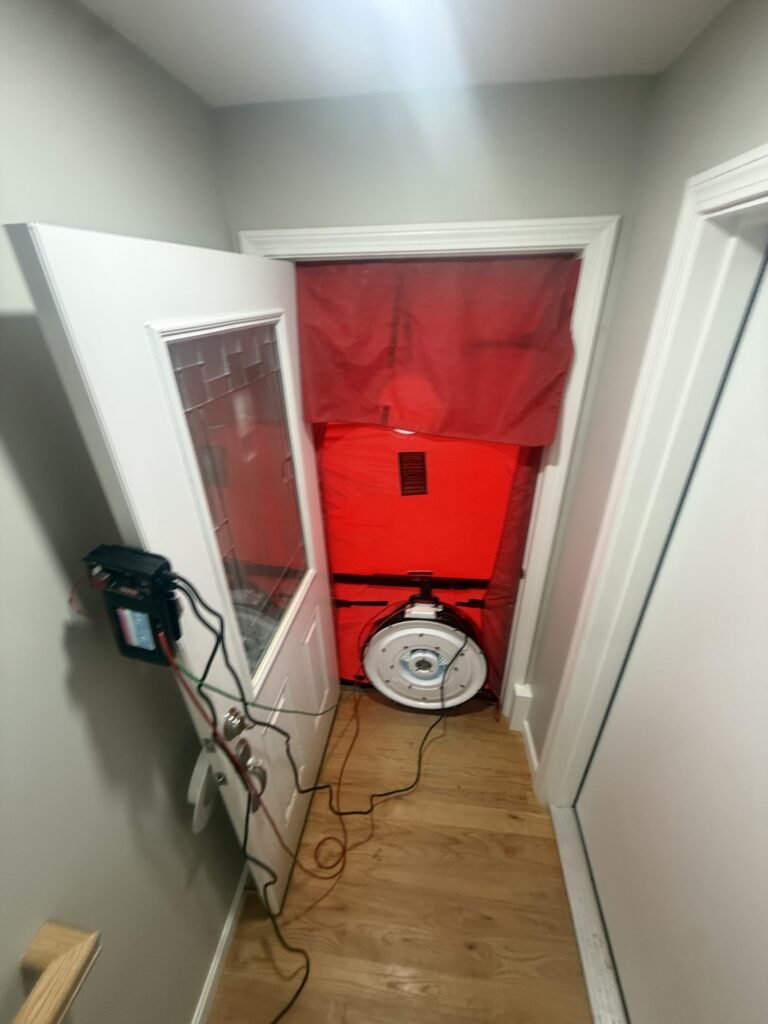
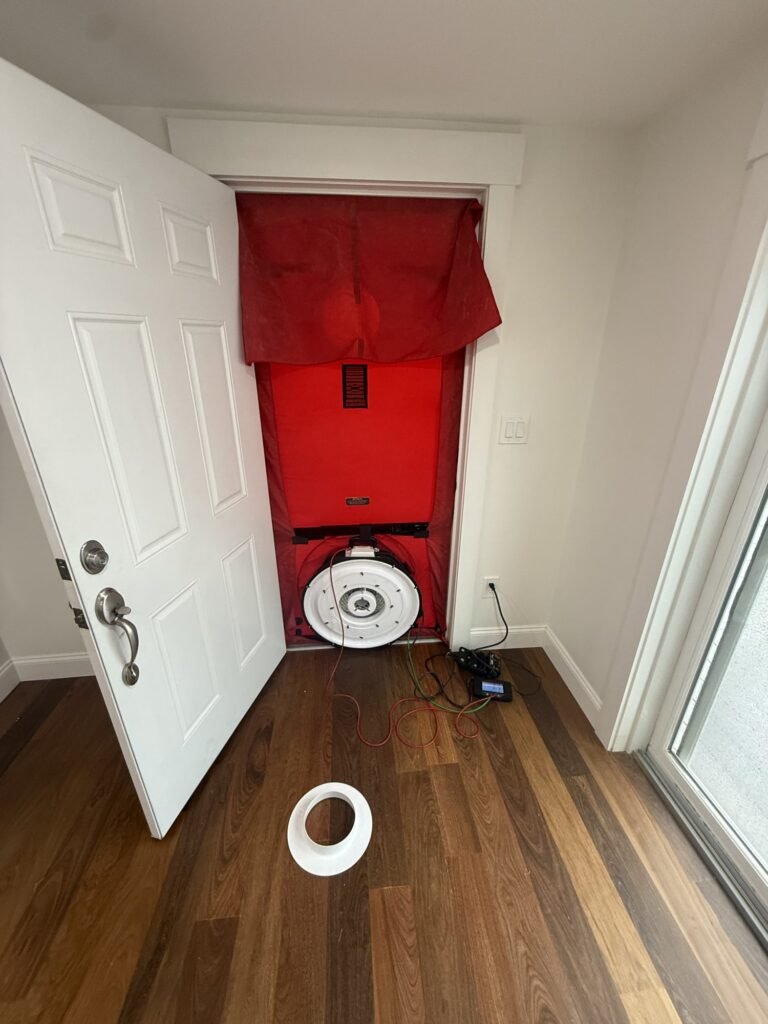
The fan mounts in an exterior doorway and holds the home at a fixed 50-Pascal pressure difference - about what a 20 mph wind would exert. The airflow required to maintain that pressure, in CFM, converts to ACH50 using the home's conditioned volume.
The code converts the result to Q50 (CFM at 50 Pa) with Q50 = (Volume × ACH50) ÷ 60. A 2,700 sq ft home at 2 ACH50 works out to roughly 810 CFM50.
Keeping Heat In During Adams Cold Spells
Air-leakage heat loss grows with the gap between indoor and outdoor temperature, which is why a drafty home feels worst in a deep freeze. Warm air you have paid to heat escapes high, cold air rushes in low, and the heating system ends up chasing a load that keeps climbing as the temperature drops.
Sealing and verifying the envelope with a blower door test blunts that stack effect. You keep more of the heat you have already produced, cold-floor drafts fade, and the furnace or heat pump can actually hold temperature through the coldest stretches instead of running flat out and falling behind.
Lower heating load
Less infiltration means a smaller winter heat-loss load and equipment that can keep up.
Retain paid-for heat
Warm air stays in the living space instead of escaping out the top of the house.
Steadier comfort
Fewer cold-floor drafts and a temperature that holds between heating cycles.
Where Adams Homes Leak Air
During depressurization the leaks are exaggerated, making them easy to find. In Berkshire County's older housing stock the usual suspects are rim joists, top plates, attic hatches, recessed lights, and penetrations for plumbing and wiring. Coastal and exposed sites feel wind-driven infiltration most, so a tight, verified envelope pays back quickly here.
Best Fit for Projects Like
- Additions over 1,000 sq ft that trigger testing
- Homes chasing Passive House or net-zero targets
- Multi-family and townhouse units
- New single-family homes needing a code compliance test
- Certificate-of-occupancy sign-off
Blower Door Testing Adams MA Facts
Ties into ventilation
Because a tight home needs mechanical fresh air, the verified blower-door rate feeds the R403.6 ventilation sizing under ASHRAE 62.2 - air sealing and ventilation are designed together.
Savings from air sealing
Reducing leakage from about 10 ACH50 to 5 ACH50 can cut heating and cooling energy use by roughly 15 to 25 percent in a typical home.
Warmer floors, fewer drafts
Cutting the cold air drawn in low means warmer floors and fewer cold-corner drafts, which is often the comfort difference people notice first after air sealing.
The Q50 conversion
The code converts the ACH50 result to Q50 (CFM at 50 Pa) using Q50 = (Volume x ACH50) / 60. A 2,700 sq ft home at 2 ACH50 works out to about 810 CFM50.
Trusted for Blower Door Testing Adams MA
As a builder, I need accurate and dependable HERS ratings to keep projects on track. This company never disappoints. Always on time, always professional.
I am building a 5-unit conversion in East Boston and used this HERS rating company. Some of the most reasonable, knowledgeable HERS raters I have dealt with in the greater Boston area.
Had a pleasure working with Dom. Everything in the building turned out great and air tight for the coming winter.
Our Massachusetts Service Locations
Serving clients from our Massachusetts locations in Everett, Somerville, and Framingham.
Everett Location
371 Main St
Everett, MA 02149
Somerville Location
519 Broadway
Somerville, MA 02145
Framingham Location
68 South St
Framingham, MA 01702
Blower Door Testing in Adams: What to Expect
Adams has been a Stretch Code town since January 1, 2016, and it has not adopted the Specialized (Opt-In) Code. That means a new house in Adams needs a blower door test at the end of construction with a result of 3.0 ACH50 or lower before the certificate of occupancy. Passive House and Phius projects are held to much tighter limits.
Old mill-village stock on hilly ground
Adams has a very old housing stock. Census estimates (ACS 2020-2024) show about 55% of homes were built in 1939 or earlier and about 91% before 1980. The town's draft Open Space and Recreation Plan describes a dense mill-village core with many two- to four-unit buildings, and terrain that climbs from a valley floor near 760 feet to Mount Greylock at 3,491 feet. New homes and gut renovations here deserve extra attention at:
- Rim joists and sill plates at the foundation.
- Attic hatches, recessed lights and top plates.
- Shared walls and floors in two- to four-unit buildings.
- Plumbing, wiring and chimney chases.
Permits run through the Berkshire system
Adams uses the Berkshire County online permitting program for building, plumbing, gas and electrical permits, and online applications have been required since January 1, 2016. The system also shows which permits still need final inspections. Housing and Building Inspection Services is in Town Hall at 8 Park Street, 413-743-8300 ext. 123.
Before and after the test
Close windows and doors, turn off heating, cooling and ventilation, and fill any dry drain traps. We seal exhaust openings only where the protocol allows. A result over 3.0 ACH50 is not the end: with the fan still running we track the leaks, seal them and retest. Adams is served from our Marlborough office at 272 Lincoln St C1.
Real blower door tests by HEEC for Adams projects
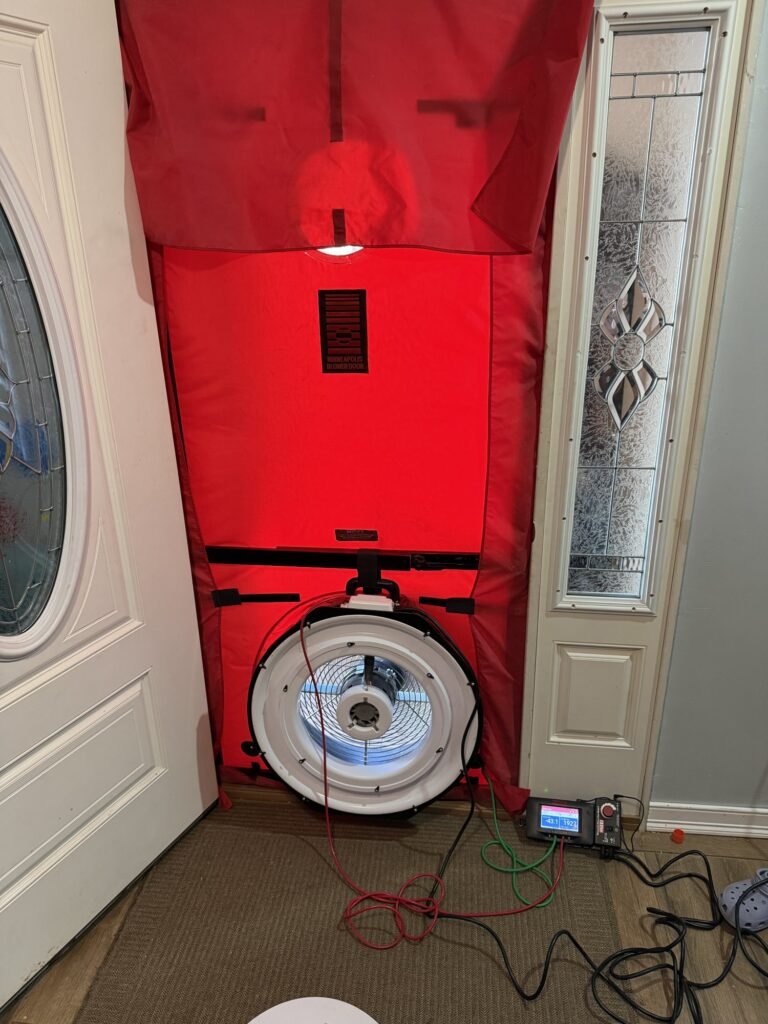
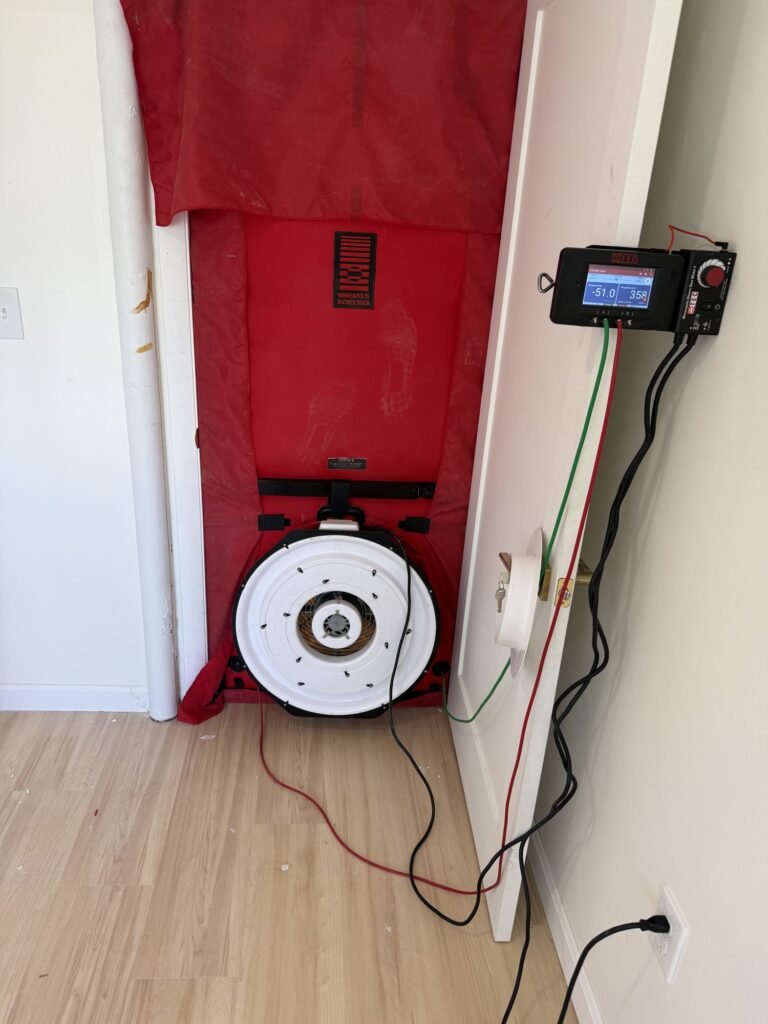
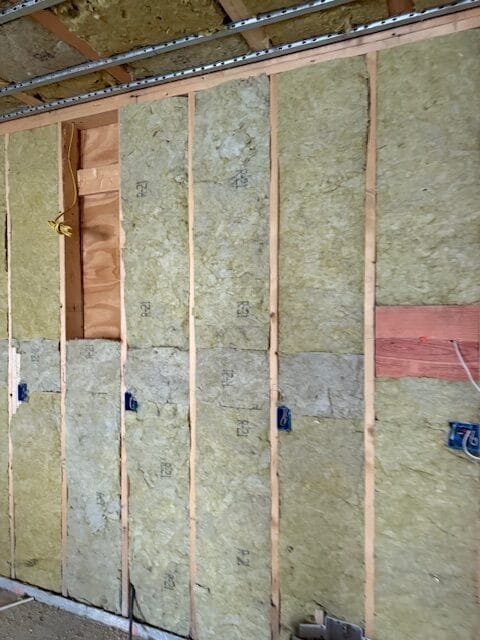
These are photos from Home Energy Efficiency Consultants blower door testing jobs in Massachusetts — the same equipment and setup our certified raters bring to Adams homes.
FAQ About Blower Door Testing Adams MA
Why does air leakage matter for my heating bill?
Uncontrolled leakage can add 30% or more to heating and cooling costs. Every cubic foot of heated air that leaks out has to be reheated, so a tight envelope directly lowers your load.
What does the 50 Pascal test pressure represent?
Fifty Pascals is roughly the pressure a 20 mph wind exerts on the whole building. Testing at a fixed pressure makes the result repeatable regardless of the weather that day.
What is a blower door test?
It is a diagnostic that measures how airtight a building is. A calibrated fan mounted in a doorway pressurizes or depressurizes the home to 50 Pascals and measures the airflow needed to hold that pressure, which is reported as ACH50.
What ACH50 does new construction need to pass?
New residential construction in Massachusetts must measure 3.0 ACH50 or lower. Many high-performance homes come in well below that figure.
Do you work with builders and homeowners?
We work with builders, remodelers, designers, and homeowners - from single tests for permit sign-off to pre-drywall diagnostics that catch problems early.
Will a tighter home lower my heating load?
Yes. Infiltration is one of the largest parts of a winter heat-loss calculation. Reducing leakage directly shrinks the heating load, which can mean right-sized equipment, lower bills, and a home that holds temperature better in cold weather.
How do I apply for a building permit in Adams?
Adams uses the Berkshire County online permitting program for building, plumbing, gas and electrical permits, and online applications have been required since January 1, 2016. Housing and Building Inspection Services is at 8 Park Street, 413-743-8300 ext. 123.
Is Adams on the Stretch Code?
Yes. The state's adoption table shows Adams on the Stretch Code since January 1, 2016, and Adams is not on the Specialized (Opt-In) Code list. New homes need a blower door result of 3.0 ACH50 or lower.
Blower Door Test Requirements for Adams Projects
Adams is not on the Specialized Code list, so new homes follow the Massachusetts Stretch Code (225 CMR 22.00), which Adams adopted effective January 1, 2016. The testing requirements below come from 225 CMR 22.00 and the 2021 IECC it amends.
| Requirement | Limit | Source |
|---|---|---|
| New home, prescriptive path | 3.0 ACH50 or lower | IECC 2021 R402.4.1.3 (Climate Zone 5, all of Massachusetts) |
| Maximum on any compliance path | 5.0 ACH50 or 0.28 CFM50 per sq ft of enclosure | IECC 2021 R402.4.1.2 |
| Attached homes and apartments tested unit by unit | 0.30 CFM50 per sq ft of unit enclosure (alternative) | IECC 2021 R402.4.1.2 exception |
| Mass Save ENERGY STAR tier | 1.5 ACH50 or lower | Mass Save new construction program |
| Passive House (PHI) | 0.6 ACH50 or lower | Passive House Institute |
| Passive House (Phius) | 0.06 CFM50 per sq ft of enclosure (0.08 for non-combustible 5+ stories) | Phius 2024 Certification Guidebook |
How the house is set up for the test
- Exterior windows and doors closed, with no sealing beyond normal weatherstripping
- Dampers closed but not taped, and interior doors open
- Exterior ventilation openings sealed, heating and cooling turned off, supply and return registers open
- Tested at 50 Pascals per ANSI/RESNET/ICC 380, ASTM E779 or ASTM E1827, with a signed report for the Adams building department
Sources: 225 CMR 22.00 (2025 edition) and the 2021 IECC sections listed. Adams is in Berkshire County, served from our Marlborough (272 Lincoln St) office.
Blower Door Questions from Adams Builders
What blower door number does a new home in Adams need?
On the prescriptive path the 2021 IECC requires 3.0 ACH50 or lower in Massachusetts, and no home on any path may exceed 5.0 ACH50. Homes on the HERS path are tested the same way, and the result goes into the HERS model, so a tighter house earns a lower HERS score.
What is ACH50?
Air changes per hour at 50 Pascals: how many times the home's air volume leaks out each hour while a blower door holds the house at 50 Pa. ACH50 = CFM50 × 60 ÷ conditioned volume.
How are townhouses and apartments tested?
Each dwelling unit can be tested on its own and meet 0.30 CFM50 per square foot of the unit's enclosure, which counts walls, floor and ceiling shared with neighbors. Large buildings may also get a whole-building test.
What gets taped or closed during the test?
Windows and exterior doors are closed, dampers are closed but not sealed, and exterior ventilation openings such as bath fan and ERV/HRV terminations are sealed. Interior doors stay open and the heating and cooling system is off.
When should the blower door test happen?
The code test happens at the end of construction. We recommend a pre-drywall test once the air barrier is complete, when leaks are cheap to find and fix, so the final test is a formality.
How much does blower door testing cost in Adams?
Pricing depends on the size of the building and the number of units. Send your plans or address and we will quote the test, or bundle it with your HERS rating and duct test in one visit.
Related: Duct leakage testing in Adams · HERS rating in Adams · Stretch Code help in Adams
Get Started With Blower Door Testing Adams MA
Book a certified blower door test and get a permit-ready air-tightness report. Call 617-501-6788.

Mass Save®-Listed HERS Rater
 U.S. DOE Efficient New Home
Trusted Partner — Verified
 ENERGY STAR®
Partner
 Phius Certified
Passive House Verifier
 ICC
ICCMember★★★★★136 Google
Reviews
The Phius Certified Verifier logo is used under license from Phius.
HERS Ratings in Adams, Massachusetts
Home Energy Efficiency Consultants provides Adams with certified HERS ratings, blower door and duct leakage testing, and Massachusetts energy-code compliance for new construction, additions, and major renovations — with same-day preliminary reports.
We rate homes across the Commonwealth from our four offices. Reach the one nearest your Adams project — Somerville, Framingham, Marlborough, or Everett — or call (617) 501-6788 to schedule a Adams rating.
More Massachusetts Towns We Serve
Certified HERS ratings, blower door testing and energy code compliance across all 351 Massachusetts cities and towns.