HERS Rating Quincy MA
Quincy — the City of Presidents and the largest city on the South Shore — is in the middle of a building boom, from the Quincy Center redevelopment and Marina Bay waterfront to steady infill and teardown-rebuilds across Wollaston, Squantum, and Merrymount. Home Energy Efficiency Consultants provides RESNET-certified HERS ratings for all of it, helping Quincy homeowners, builders, and developers meet the Massachusetts energy code with clear guidance from design-phase modeling through final blower-door and duct testing.
Why clients choose us
We help projects in Quincy with energy code guidance, HERS documentation, practical field support, and clear communication from planning through completion.
HERS Rating Quincy MA Services
Looking for HERS Rating Quincy MA services? We provide certified HERS ratings for homes throughout Norfolk County, with support for new construction, additions, and major renovations.
We help projects in Quincy meet Massachusetts energy code requirements with practical guidance on insulation, HVAC systems, ventilation, air sealing, and final project verification.
Serving homeowners, builders, and developers across Quincy, Massachusetts, Home Energy Efficiency Consultants provides practical support from planning through project completion.
Best fit for projects like:
- New construction homes
- Additions and expansions
- Gut renovations
- Permit-driven energy compliance
- Projects needing HERS documentation
Learn more about home energy ratings, RESNET standards, and Mass Save programs.
HERS Rating Quincy MA Project Support
HERS Rating Quincy MA services help builders and homeowners plan for energy code compliance, documentation, and project completion.
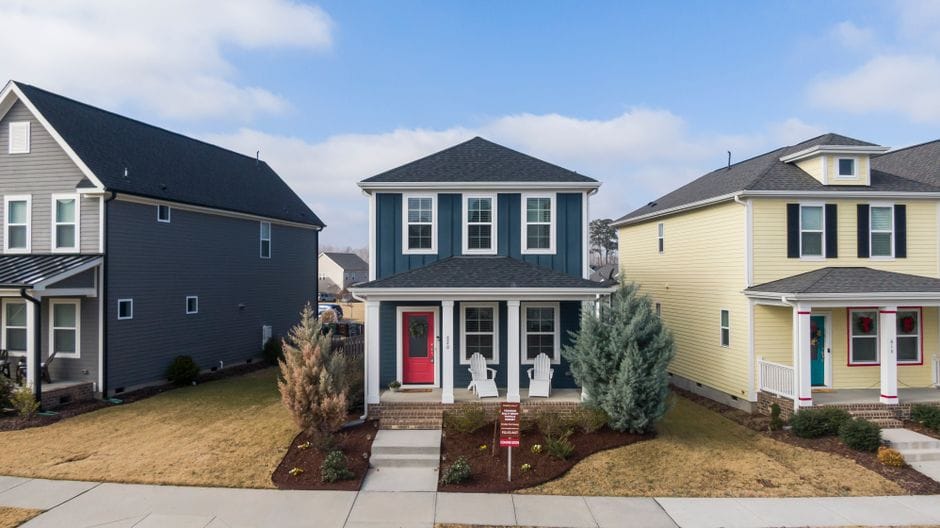
Certified HERS Rating Quincy MA
We provide HERS rating support for new homes, additions, and major renovations in Quincy, Massachusetts.
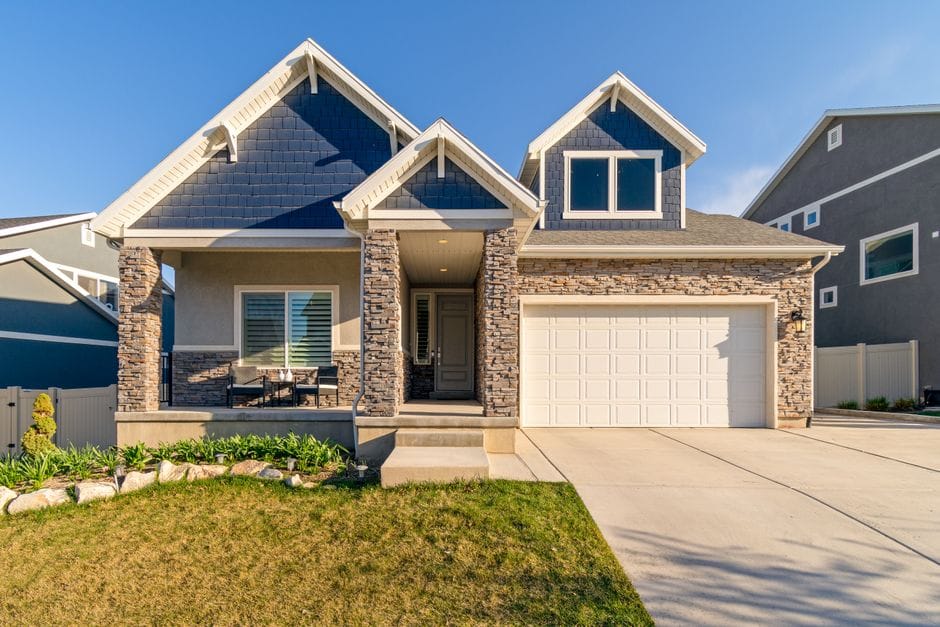
Energy Code Guidance in Quincy
Quincy is a Norfolk County city on the South Shore, in Climate Zone 5A, where a mix of coastal properties and dense residential neighborhoods shapes energy-code planning. Permits, plan review, and inspections run through Quincy Inspectional Services, which administers the state building code and local requirements. We prepare the HERS documentation these reviews rely on so your Quincy project clears code without delays. For a plain-English rundown of the residential requirements, see our Energy Code Review guide, covering new construction, additions, and major renovations in Quincy.
Why Choose Us for HERS Rating Quincy MA
Strong communication, local knowledge, and practical project support.
- Massachusetts energy code experience
- Fast report turnaround
- Clear communication throughout the project
- Practical field support for builders and homeowners
- Trusted by clients across Massachusetts
HERS rating pricing in Quincy depends on home size, design complexity, and project scope.
HERS Rating Quincy MA Facts
Helpful answers for homeowners, builders, and developers planning a project in Quincy.
Quincy is the largest city in Norfolk County and one of the biggest on the South Shore, sitting just south of Boston along the coast. Known as the City of Presidents — birthplace of John Adams and John Quincy Adams — it blends dense older neighborhoods of triple-deckers and colonials in Wollaston and Quincy Point with major new development around Quincy Center and the Marina Bay waterfront. That range means everything from gut renovations of century-old homes to ground-up mid-rise construction, all within IECC climate zone 5A, the cold-climate designation that drives Massachusetts HERS and energy-code targets.
What is a good HERS score for a new home in Quincy?
For new construction in Quincy, the Massachusetts stretch code requires a HERS Index of 42 or lower for mixed-fuel homes and 45 or lower for all-electric homes (as of July 1, 2024), or 45/48 using the embodied-carbon trade-off path. Since a standard new home scores around 100 and a net-zero home scores 0, Quincy's targets call for genuinely high-performance building.
What triggers a HERS rating in Quincy?
New construction always triggers a rating — including the multi-family and mixed-use projects around Quincy Center. Additions over 1,000 sq ft or exceeding 100% of the existing conditioned floor area require one too, as do major renovations and change-of-use projects. Small additions and basement or attic conversions that don't move the thermal boundary are generally exempt.
Where does HERS rating apply in Quincy?
Any new build, sizable addition, or major renovation pulling a permit in Quincy is measured against the Massachusetts energy code, and a certified HERS rating is the standard way that compliance gets documented and signed off.
What climate zone is Quincy in?
Quincy falls in IECC climate zone 5A, the cold-climate tier covering all of Massachusetts, which drives the insulation depth, air-tightness, and mechanical performance a HERS rater has to verify — including in Quincy's coastal, wind-exposed neighborhoods.
Do existing homes in Quincy need a HERS rating?
Usually not — an existing Quincy home only needs a rating for a major renovation, a qualifying addition, or a change that trips an energy-code permit. New construction, by contrast, essentially always requires one.
How does a HERS rating help Quincy homeowners?
The lower the HERS Index, the tighter and more efficient the home — which for Quincy owners means lower heating and cooling bills, better comfort near the water, smoother permitting, and stronger resale in a fast-moving South Shore market.
What is a HERS Rating?
A HERS Rating measures the energy efficiency of a home and is commonly used for new construction, additions, and major renovations in Massachusetts.
Who may need one?
Builders, homeowners, and developers in Quincy may need a HERS rating depending on project size, code path, and permit requirements.
Why local experience matters
Local experience helps ensure your project is reviewed with Massachusetts requirements, practical construction details, and real jobsite conditions in mind.
What the process may include
Depending on the project, the process may include plan review, energy modeling, field verification, and final testing support.
Our 5-Step HERS Rating Process in Quincy
From permit-ready planning to your final certificate, here is exactly how we guide Quincy projects through HERS compliance — including the consulting step most raters leave out.
Plan Review & Preliminary Report
We start by reviewing your plans and issuing the preliminary HERS report your building department needs before a permit can be pulled.
Equipment Consulting
Before anything is installed, we confirm your appliances, HVAC and equipment are the right choices. Many companies skip this and just hand over a report — this step keeps you from buying the wrong gear.
Mid-Point Inspection
Once framing is done, we verify insulation and air sealing are installed correctly and to code, capturing what the HERS report depends on before drywall goes up.
Final Testing
We complete blower-door testing, duct-leakage testing and ERV balancing. Proper ERV balancing is critical, since an unbalanced system can create pressure problems throughout the home.
Final Certificate
Finally, we issue the signed HERS certificate to close out your building permit and set you up to apply for the Mass Save rebates you’ve earned.
Breaking Down the HERS Index for Quincy
Your home's energy design boils down to a single HERS number, and the rule to keep in mind is simple: lower is better. It is the standard scale used nationwide to size up how much energy a house will use.
The reference mark
A standard new home sits at 100 on the Index. Every Quincy home is scored against that same reference, so a number here means the same as a number across the city.
The road to zero
At 0, a home produces annually as much energy as it consumes. For waterfront Quincy builds, getting close to that mark leans on airtight construction and efficient mechanicals.
What a point is worth
Roughly, each point is one percent of modeled energy use, so a Quincy home at 60 is about 40 percent more efficient than the reference home — and that shows up on every utility statement.
How We Verify a Quincy HERS Rating
A trustworthy HERS score is measured, never guessed. Three procedures account for most of a Quincy rating.
- Energy modeling. We build your Quincy home into a software model — insulation, glazing, mechanicals and air sealing accounted for — to project the score and show where efficiency can be gained before construction starts.
- Blower-door testing. Using a calibrated fan to hold the house at a set pressure, we measure exactly how much air the envelope leaks. Given Quincy's coastal exposure, a tighter shell pays off in both bills and the score.
- Duct-leakage testing. On ducted systems, we pressurize the ductwork to find conditioned air escaping into unconditioned space — a costly, hidden loss that pushes a Quincy HERS score up.
HERS Ratings and the Massachusetts Stretch Code in Quincy
Massachusetts sets one of the most demanding energy codes in the country, and a HERS rating is an accepted method of showing a Quincy home meets it.
Based on IECC 2021
The state's Stretch Code adapts the 2021 International Energy Conservation Code with Massachusetts amendments under 225 CMR 22. A RESNET-certified HERS rating is one of the accepted routes for a Quincy project to comply.
Fuel choice changes the target
The code sets different bars for all-electric and fossil-fuel homes and credits all-electric designs with HERS points. We help Quincy owners understand how heating and hot-water choices move both the score and the passing line.
Tied to Mass Save
A strong HERS result can also open rebates through Mass Save, the statewide efficiency program. As a Mass Save partner, we help Quincy clients align the rating with the incentives they qualify for.
Check with the state
Because code editions change over time, the definitive reference is the state's Stretch Energy Code page. We keep every Quincy rating aligned to the version currently in effect.
Our Massachusetts Service Locations
Serving clients from our Massachusetts locations in Everett, Somerville, Framingham, and Marlborough.
Everett Location
371 Main St
Everett, MA 02149
Somerville Location
519 Broadway
Somerville, MA 02145
Framingham Location
68 South St
Framingham, MA 01702
Trusted for HERS Rating Quincy MA
Real customer feedback helps show the level of service clients expect from Home Energy Efficiency Consultants.
Eleni Kaplan
Google Review
“Dominic got us 50k back on a 3 family we renovated through the HERS rating! We will definitely be using him for future projects. He’s a huge team player — we highly recommend him.”
Kevin McLaughlin
Google Review
“We were working on a house renovation and needed a HERS rating to get our permit. Dominic was very knowledgeable, extremely professional, and efficient.”
Luis Maldonado
Google Review
“If you’re looking for a reliable HERS rating company, this is it. Professional, knowledgeable, and efficient. They also helped me secure rebates I didn’t even know were available.”
Valentina Valencia Valencia
Google Review
“Best decision I made was hiring Home Energy Efficiency Consultants LLC. Their attention to detail and willingness to answer all my questions made the process stress-free.”
Lee Kravetz
Google Review
“I worked with Dominic on my HERS rating. He was knowledgeable and helped me through each step of making sure I got things right on my build.”
mike cartolano
Google Review
“Super Fast and Great Price ..great Communication”
Follow Home Energy Efficiency Consultants
Connect with us across social platforms for projects, updates, and energy code support.
Related HERS Rating Quincy MA Services
Helpful internal links for users and search engines.
Nearby HERS Rating Quincy MA Areas We Serve
We also provide HERS rating services near Quincy and throughout Massachusetts.
FAQ About HERS Rating Quincy MA
Common questions about HERS ratings in Quincy, Massachusetts.
What is a HERS rating?
A HERS (Home Energy Rating System) rating is the national industry standard for measuring a home's energy efficiency. A certified HERS Rater reviews the plans and performs on-site inspections and testing, including a blower door test, to produce a score. Lower is better: a standard new home built to 2006 code scores 100, while a net-zero home scores 0.
What is a good HERS score?
Any score below 100 beats a standard new home, and the lower the number the more efficient the home. A score of 50 means the home is about 50% more efficient than a standard new build, while older unimproved homes often score 130 or higher. Massachusetts code targets are now well below 100.
How have Massachusetts HERS requirements changed in recent years?
Massachusetts has steadily tightened the maximum allowable HERS score. The required score for new homes was around 55 in 2022, dropped to 52 in 2023, and tightened to HERS 42 for mixed-fuel homes and 45 for all-electric homes as of July 1, 2024. The 2023 update also adopted the 2021 IECC as the base code and removed the earlier 5-point HERS credit for rooftop solar, pushing toward efficiency and electrification.
How much does a HERS rating in Quincy cost?
A HERS rating in Quincy typically costs:
- Single-family homes: $1,850–$2,500
- Accessory dwelling units (ADUs): $1,600–$1,850
- Multifamily: $900–$1,450 per unit
Final pricing depends on home size, complexity, and the number of required site visits.
What HERS score do I need to pass in Quincy?
As of July 1, 2024, new construction needs a HERS 42 for homes using any fossil fuel and a HERS 45 for all-electric homes, verified by a certified RESNET HERS rater. Low-emission concrete comes in around 45 with gas or 48 all-electric, an ADU is 55 all-electric or 52 with gas, and multifamily matches the single-family requirement.
What triggers a HERS rating in Quincy?
New construction almost always requires one. Under energy code Section R502, an addition triggers a HERS rating when the added conditioned floor area exceeds 1,000 square feet or doubles the size of your existing conditioned space (more than 100% of the existing conditioned floor area), requiring the combined dwelling to meet the maximum HERS ratings in Table R406.5.
Do renovations or alterations require a HERS rating?
They can. Under Section R503, extensive alterations (or IEBC Level 3 alterations) that exceed 1,000 square feet or double the size of the existing conditioned space (over 100% of the existing conditioned floor area) must meet the maximum HERS ratings in Table R406.5. Smaller alterations must still meet component requirements for insulation, replacement windows, water heating, and lighting.
Do I need a HERS rating in Quincy?
If Quincy has adopted the Massachusetts Stretch Energy Code, then yes for new homes, larger additions, and extensive renovations. A certified HERS rater can confirm whether your specific project triggers the requirement.
What kind of windows do I need to meet the new energy code?
All-electric homes favor a U-value of .25/.26 with an SHGC of .42 or higher, while gas homes favor tighter values. For replacements specifically, Section R503.1.1.1 requires new units, including sash and glazing, to meet the U-factor and SHGC in Table R402.1.3.
What kind of insulation do I need to pass a HERS rating?
You generally need around R-21 to R-30 depending on whether you go gas or all-electric.
What if I do not want to use spray foam?
You can use exterior insulation and then use mineral wool inside the wall.
How can I build to energy code in a cost-effective way?
Using low-emission concrete can reduce the HERS score by about 3 points, saving close to $20k or more between systems and upgrades.
What is an ERV system and do I need it in Quincy?
Yes, it is now required by code. You can use an ERV or HRV to satisfy the requirement for balanced mechanical ventilation.
How much CFM do I need for my ERV?
It is based on bedrooms, square footage, and insulation volume, along with the ACH from your blower door test.
What do I need to start a HERS rating?
You need a set of architectural plans and to know whether you will go gas or all-electric.
How can I improve my score and what affects my score?
Your score is affected by windows, insulation, HVAC, and appliances such as the washer, dryer, dishwasher, and fridge.
Does a HERS rating add value to my home?
Yes. Energy-efficient HERS-rated homes have been shown to sell at a premium over comparable standard homes, on top of ongoing savings from lower utility bills.
Are there rebates for a HERS rating in Quincy?
Yes. Working with a certified HERS rater can unlock Mass Save incentives for new construction and renovations.
Where can I find a HERS rater near Quincy?
We are a certified RESNET HERS rater serving Quincy and the surrounding area. We provide HERS ratings for new construction, additions, and renovations.
HERS Score Requirements in Quincy
Massachusetts Stretch Energy Code HERS thresholds have tightened over time. These are the maximum HERS Index scores required to pass for new construction in Quincy, based on when the building permit was filed.
| Project type | Mixed-fuel (gas) target | All-electric target |
|---|---|---|
| New construction | HERS 42 | HERS 45 |
| New construction with embodied carbon credit (carbon trade-off) | HERS 45 | HERS 48 |
| Accessory dwelling units (ADUs) | HERS 52 | HERS 55 |
| Major remodels, additions & change-of-use | HERS 65 | HERS 70 |
The numbers in this table have been moving in one direction — down — and Quincy projects feel it directly. A 2022 permit let a new home land at HERS 55; the 2023 cycle cut that to 52; and as of July 2024 the requirement dropped to 42 for anything using fossil fuel, with a 45 allowance for all-electric homes. What matters for your Quincy build is that the code is applied by permit date, so plans drawn to an older, more forgiving target can come up short — we prevent that by rating your home against the standard your permit actually triggers.
Experience & Track Record in Quincy
Quincy homeowners want assurance their rating is done right, and our owner delivers it with over 25 years of construction plus the credentials that back it up.
Construction experience
Twenty-five-plus years on the tools mean our Quincy energy recommendations are grounded in how homes are actually built.
Unrestricted CSL License
An Unrestricted Construction Supervisor License means Quincy code is second nature to us, framing through finish.
Certified & Mass Save partner
RESNET certification and Mass Save partnership ensure your Quincy rating is accepted by inspectors and rebate programs without a hitch.
Historical thresholds: new homes required HERS 55 in 2022, HERS 52 as of January 1, 2023, and HERS 42 (mixed-fuel) / 45 (all-electric) as of July 1, 2024. Projects using the embodied carbon trade-off may build to HERS 45 with gas or HERS 48 all-electric.
When is a HERS rating required in Quincy?
Under the Massachusetts Stretch Code, a certified HERS rating is required in Quincy for:
- New construction: all new residential dwellings, including the multi-family and mixed-use projects common in Quincy Center.
- Large additions: any addition exceeding 1,000 sq ft or increasing conditioned floor area by more than 100%.
- Major renovations & change-of-use: whole-home ratings for extensive alterations — frequent in Quincy's older triple-decker and colonial stock.
Basement or attic conversions that don't move the thermal boundary or change the footprint are generally exempt.
Solar-ready and EV-ready requirements
Under the Specialized Stretch Code, most new one- and two-family homes and townhouses with 600+ sq ft of suitably oriented roof must reserve a solar-ready zone (additions under 1,000 sq ft are exempt), and new homes must be EV-ready — wired with the capacity, conduit, and panel space to add a Level 2 charger later without a costly rewire.
Mass Save Rebates & Incentives
Below are the Mass Save incentives Quincy homeowners can pursue. Ground-up construction and large renovation jobs run through separate incentive tracks, and the amount you earn rises as your HERS score beats the code target by a wider margin — an efficient Quincy home is a more rewarding one. We manage the energy modeling and all paperwork so every incentive your project qualifies for gets claimed.
A HERS rating can unlock Mass Save incentives for eligible projects in Quincy. Incentives are available for both new construction and for renovations and additions. Actual amounts depend on project type, number of units, efficiency level, and program eligibility.
New Construction Incentives (Single-family, 1-4 units)
| Path | Single Family | 2-Unit | 3-Unit | 4-Unit |
|---|---|---|---|---|
| Base (all-electric) | $7,500 | $8,750 | $10,000 | $11,250 |
| ENERGY STAR (30%+ savings or HERS 45) | $15,000 | $17,500 | $20,000 | $22,500 |
| Passive House | $25,000 | $30,000 | $35,000 | $40,000 |
Incentives up to $25,000 are available for the construction of single-family homes.
Renovations & Additions Incentives (Single-family, 1-4 units)
| Tier | Incentive |
|---|---|
| Base | Pay-for-Savings ($0.30/kWh + $30/MMBtu + savings x $2,500); up to $10,000 total |
| All-Electric Base | Pay-for-Savings ($0.40/kWh + savings x $3,000); up to $15,000 total |
| Level 1 | Single-family $20,000; 2-unit $30,000; 3-unit $40,000; 4-unit $50,000 |
| Level 2 | Single-family $30,000; 2-unit $40,000; 3-unit $50,000; 4-unit $60,000 |
Eligibility: projects within Sponsor electric service territory. Renovations must be extensive (about 50% or more of the original home) or additions of at least 500 square feet. Full terms and conditions are available on the Mass Save website. Incentive programs can change.
Get Started With HERS Rating Quincy MA
Contact Home Energy Efficiency Consultants today for certified HERS ratings and project support in Quincy, Massachusetts.