If you are building, adding on, or renovating in Massachusetts, one of the first questions is whether your project needs a HERS (Home Energy Rating System) rating. This 2026 guide explains exactly what triggers a HERS rating, the score your project must hit, and how compliance works — drawn from the 2025 Massachusetts DOER Technical Guidance that governs the Stretch and Specialized energy codes.
When is a HERS rating required in Massachusetts?
Under the 2025 Massachusetts energy code (section R406), a HERS rating is required for:
- New residential construction — every new low-rise home.
- Additions over 1,000 sq ft, or additions greater than 100% of the existing conditioned floor area.
- Extensive Level 3 alterations over 1,000 sq ft that affect more than 50% of the conditioned floor area.
Smaller additions and alterations typically use the prescriptive path documented with REScheck instead of a full performance rating.
2026 HERS score targets by project type
The lower the HERS index, the more efficient the home. Your target depends on fuel type and project type:
- New home, mixed-fuel (gas heat, hot water, or cooking): HERS 42 or lower.
- New home, all-electric: HERS 45 or lower.
- Embodied-carbon materials credit: allows up to HERS 48.
- Accessory dwelling units (ADUs): HERS 52 mixed-fuel, 55 all-electric, or 58 with the credit.
- Major additions and renovations: tiered targets of roughly HERS 52 to 75 by scope.
Other 2026 code requirements we verify
Beyond the HERS score, new homes must meet: a blower door test at 3.0 ACH50 or tighter; duct leakage capped at 4 CFM25 per 100 sq ft when ducts run outside conditioned space; whole-house mechanical ventilation (ASHRAE 62.2); and EV-ready wiring. Compliance runs through the HERS / Energy Rating Index performance path.
Stretch Code vs. Specialized (Opt-In) Code
Massachusetts has three code levels: base (2021 IECC), Stretch, and Specialized (Opt-In). The Stretch Code is the statewide baseline. The Specialized Code — adopted by roughly 50 municipalities — adds electrification requirements: fossil-fuel homes must be pre-wired for future electrification and add on-site solar where roof space allows, all-electric homes must use heat pumps for heating and hot water, fossil-fuel homes over 4,000 sq ft must reach net-zero, and new multifamily over 12,000 sq ft must meet Passive House. Check your town’s status on our locations pages, which list the code status for the communities each of our four offices serves.
2026 Mass Save incentives
A qualifying HERS rating unlocks significant rebates: new all-electric single-family homes earn $7,500 (Base) to $15,000 (ENERGY STAR NextGen) to $25,000 (Passive House), up to $40,000 for a four-unit building; and all-electric renovations earn up to $30,000. All Mass Save incentives require a Mass Save-approved, RESNET-certified HERS rater. See our HERS rating cost guide for how the rating pays for itself.
How the HERS rating process works
We build an energy model from your plans and return a same-day preliminary HERS score, perform a pre-drywall inspection, run blower door and duct leakage testing on the finished home, and file the final HERS certificate with your local building department — with test results back in 24 to 48 hours.
Get your HERS rating — four Massachusetts offices
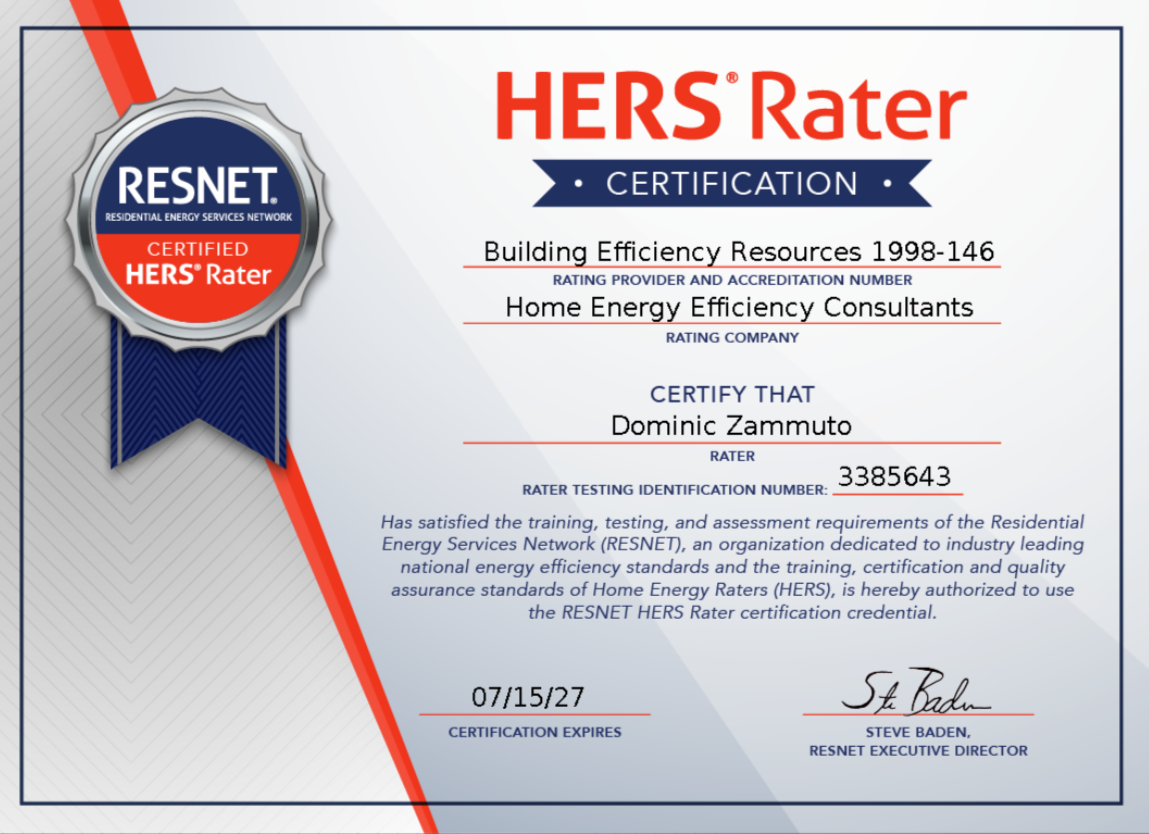
Home Energy Efficiency Consultants is RESNET-certified with more than 15,000 ratings completed and a 5.0 rating across 136 Google reviews. We serve all 351 Massachusetts cities and towns from offices in Somerville, Framingham, Marlborough, and Everett. Call (617) 501-6788 or request a quote.
2026 HERS rating FAQ
What triggers a HERS rating in Massachusetts?
A HERS rating is required for new residential construction; additions over 1,000 sq ft (or greater than 100% of the existing conditioned floor area); and extensive Level 3 alterations over 1,000 sq ft that affect more than 50% of the conditioned floor area.
What HERS score does my project need in 2026?
New mixed-fuel (gas) homes must reach HERS 42 or lower; new all-electric homes HERS 45 or lower, or up to HERS 48 with the embodied-carbon materials credit. ADUs range from HERS 52 (gas) to 55 (all-electric) to 58 with the credit, and major additions and renovations use tiered targets of roughly 52 to 75.
How much does a HERS rating cost in Massachusetts?
Pricing depends on project size and scope. See our full breakdown in the Massachusetts HERS rating cost guide, and call (617) 501-6788 for a quote.
What is the difference between the Stretch and Specialized codes?
The Stretch Code is the statewide baseline verified by a HERS rating. The Specialized (Opt-In) Code adds requirements: fossil-fuel homes must be pre-wired for electrification and add on-site solar where roof space allows, new all-electric homes must use heat pumps, fossil-fuel homes over 4,000 sq ft must reach net-zero, and new multifamily over 12,000 sq ft must meet Passive House.