Net Zero & Passive House Rules by City in Massachusetts
A few Massachusetts cities reward high-performance buildings with extra units or floor area. Others require Passive House or net zero carbon through zoning. And 61 cities and towns have adopted the Specialized Energy Code, which requires Passive House for larger multifamily buildings. Here is what applies where, and how we help you meet it.
The short version
Somerville gives a density bonus for Net Zero, LEED Platinum certifiable buildings. Boston and Cambridge require green or net zero carbon standards on larger projects through zoning. Every Specialized Code town requires Passive House for residential buildings over 12,000 sq ft.
Zoning Incentives and Requirements by City
Only a handful of Massachusetts cities tie zoning to energy performance. Somerville, Reading and Acton give extra density or floor area for high-performance buildings; Boston, Cambridge, Northampton and Watertown require green, net zero carbon, HERS or solar standards on certain projects. Everywhere else, the energy rules come from the building energy code (base, Stretch or Specialized), not zoning.
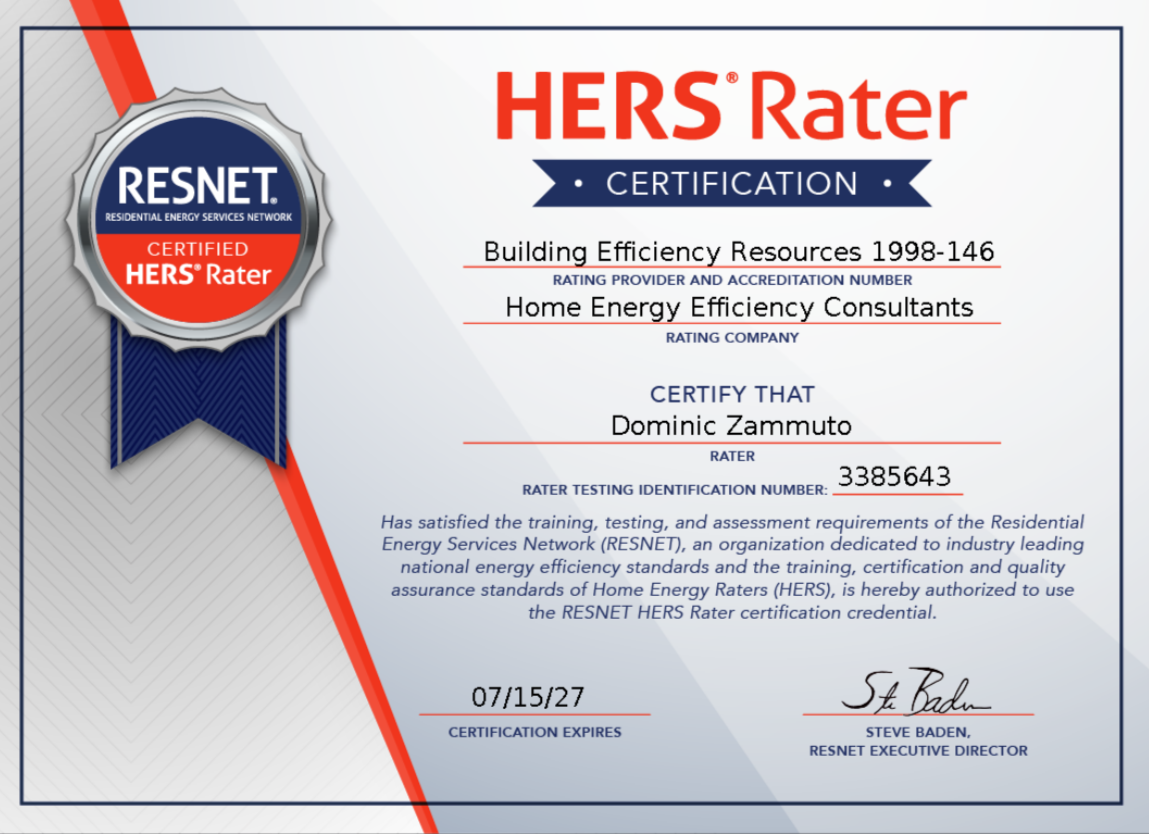
Written by Dominic Zammuto, RESNET-certified HERS Rater (#3385643) and Phius Certified Verifier, Multifamily Qualified (Phius ID 124235). Checked against city and state sources in November 2026. Zoning changes often, so confirm with the city before you design.
| City | Type | What it says |
|---|---|---|
| Somerville | Density bonus | Buildings that are Net Zero Buildings under the Specialized Energy Code and LEED Platinum certifiable can use a lower lot area per unit, for example 875 sq ft instead of 1,125 sq ft per unit in MR4. Full guide to the Somerville Net Zero Density Bonus. |
| Boston | Requirement (Zoning Article 37) | Since July 1, 2025, projects over 20,000 sq ft or with 15 or more residential units going through Article 80 review must meet Net Zero Carbon, which limits operating greenhouse gas emissions to zero for most building types. Large projects over 50,000 sq ft also report embodied carbon. Full guide to Boston Net Zero Carbon zoning. |
| Cambridge | Requirement (Zoning Article 22) | Projects of 25,000 sq ft or more must meet a green building standard: LEED Silver (25,000 to 50,000 sq ft) or Gold (50,000+ sq ft), Passive House (Phius or PHI), or Enterprise Green Communities, plus a Net Zero Narrative and enhanced commissioning. Full guide to Cambridge Article 22. |
| Reading | Density condition (MBTA Communities district) | The Downtown Smart Growth District was upzoned to 35 units per acre. Projects that ask the CPDC for a density waiver must be designed to LEED Certified, Passive House, Net Zero or an equivalent standard. Full guide to the Reading density waiver. |
| Acton | Floor area bonus | In the East Acton Village District, LEED-certified projects can add net floor area up to the equivalent of 0.05 FAR by special permit. Full guide to the Acton LEED bonus. |
| Northampton | Requirement (Sustainable Growth Overlay, 40R) | New homes in the overlay need a HERS rating of 47 or lower for units of 1,200 sq ft or less and 41 or lower for larger units, or LEED Gold. Full guide to the Northampton 40R HERS rule. |
| Watertown | Requirement (solar) | Most new developments of 10,000 sq ft or more, or with 10 or more residential units, must include solar equal to at least 50% of the roof area. Full guide to the Watertown solar and LEED rule. |
| Newton | Requirement (Zoning Section 5.13) | Special permit projects with 20,000 sq ft or more of new or rebuilt floor area must be designed to LEED Silver or Gold, certified Passive House, or Enterprise Green Communities, with EV charging and an embodied carbon analysis. Full guide to Newton Section 5.13. |
| Arlington | HERS exemption + solar requirement | On R0, R1 and R2 lots with an existing house, a home built to HERS 44 or lower is exempt from minimum lot area and frontage. Environmental Design Review projects need solar on 50% of the roof. Full guide to the Arlington HERS 44 exemption. |
The Statewide Layer: Specialized Energy Code Towns
Even where zoning says nothing, the building code does. These 61 cities and towns have adopted the Massachusetts Specialized (Opt-In) Energy Code:
Acton, Amherst, Andover, Aquinnah, Arlington, Ashfield, Ashland, Bedford, Belmont, Beverly, Boston, Brookline, Cambridge, Canton, Carlisle, Chelmsford, Concord, Dedham, Eastham, Easthampton, Framingham, Harvard, Hingham, Hopkinton, Lexington, Lincoln, Maynard, Medford, Melrose, Milton, Natick, Needham, Newburyport, Newton, Northampton, Norwood, Pelham, Salem, Sharon, Sherborn, Shutesbury, Somerville, Stockbridge, Stow, Sudbury, Swampscott, Truro, Wakefield, Warwick, Watertown, Wayland, Wellesley, Wellfleet, Wenham, Westford, West Tisbury, Westborough, Weston, Williamsburg, Winchester, Worcester.
Residential buildings over 12,000 sq ft
Must use the Passive House path (Phius or PHI certification), plus one of the code's net zero pathways. This covers most apartment and condo buildings.
New homes over 4,000 sq ft
Must be Zero Energy or All-Electric. Smaller homes can also use a mixed-fuel path with full electric pre-wiring and solar.
Smaller homes and buildings
Can show compliance with a HERS rating (HERS 42 mixed-fuel or 45 all-electric for new homes) or Passive House.
Stretch Code towns
Most other Massachusetts towns use the Stretch Code: HERS ratings for new homes and larger additions, with Passive House as an option, not a requirement.
Not sure which code your town uses? See our Specialized Code requirements for new homes or ask us.
How We Help
Find the cheapest path that passes
We check your city's zoning and energy code early, before design is locked, and pick the pathway with the lowest build cost.
Passive House design and modeling
Our in-house Certified Passive House Consultant (CPHC) models the building and sets the insulation, window, airtightness and ventilation targets.
Documents for permits and zoning
We prepare the energy code paperwork for the building department and the energy numbers your zoning team needs. HEEC does not do LEED; where a city requires LEED, your LEED consultant handles that part.
Testing and verification
As a Phius Certified Rater and Verifier with the Multifamily qualification and a RESNET HERS Rater, we do the inspections, blower door testing and final verification with our own crew.
More: Phius Passive House verification · Multifamily HERS, ENERGY STAR and Phius
FAQ: Net Zero and Passive House Rules in Massachusetts
Which Massachusetts cities give a zoning bonus for net zero buildings?
Somerville is the main one. Its Net Zero Density Bonus lets buildings that are Net Zero Buildings under the Specialized Energy Code and LEED Platinum certifiable fit more units on the same lot. Reading ties density waivers in its Downtown Smart Growth District to LEED, Passive House or Net Zero design, and Acton gives a small floor area bonus for LEED in East Acton Village. Boston, Cambridge, Northampton and Watertown have requirements, not bonuses.
Does Boston require net zero buildings?
Yes, for many larger projects. Since July 1, 2025, Boston's Zoning Article 37 requires Net Zero Carbon for projects over 20,000 sq ft or with 15 or more residential units that go through Article 80 review.
Does Cambridge require Passive House?
Not by itself. Cambridge Article 22 requires projects of 25,000 sq ft or more to meet LEED Silver or Gold, Passive House (Phius or PHI) or Enterprise Green Communities. Separately, Cambridge is a Specialized Code city, so residential buildings over 12,000 sq ft must use the Passive House path.
When is Passive House required in Massachusetts?
In Specialized Code cities and towns, residential buildings over 12,000 sq ft must use the Passive House path (Phius or PHI). In Stretch Code towns, Passive House is optional.
How many towns use the Specialized Energy Code?
As of November 2026, 61 Massachusetts cities and towns have adopted the Specialized (Opt-In) Energy Code, including Boston, Cambridge, Somerville, Newton, Brookline, Framingham and Worcester.
Sources: Mass.gov energy code adoption by municipality, Boston Planning Department Article 37, Cambridge Article 22, Somerville Office of Sustainability and Environment, Reading zoning bylaw amendments, Acton zoning bylaw, Northampton Sustainable Growth Overlay, Watertown solar requirement.
Building in a Specialized Code or Net Zero City?
Send your plans and the address. We'll tell you exactly which rules apply and the cheapest way to meet them.

Mass Save®-Listed HERS Rater
 U.S. DOE Efficient New Home
Trusted Partner — Verified
 ENERGY STAR®
Partner
 Phius Certified
Passive House Verifier
 ICC
Member★★★★★136 Google
Reviews
The Phius Certified Verifier logo is used under license from Phius.
Last updated · Home Energy Efficiency Consultants, RESNET-certified HERS raters