Blower Door Testing Huntington MA - Quick Facts
Local energy code in Huntington
- Huntington is a Stretch Code community - the statewide baseline for new construction and major renovations. IECC Climate Zone 5A.
- Massachusetts has three energy-code levels - base (2021 IECC), Stretch, and Specialized (Opt-In) - and Huntington is on the Stretch Code.
Blower door requirement in Huntington
- New homes in Huntington must test at 3.0 ACH50 or tighter under the Massachusetts Stretch Code.
- Air-leakage testing is mandatory, measured with a calibrated blower-door fan to the RESNET / ASTM protocol - there is no inspection-only substitute for the result.
- Companion duct leakage limit: 4 CFM25 per 100 sq ft of conditioned floor area when ducts run outside conditioned space.
- Same-day preliminary results; final report in 24-48 hours, filed with the Huntington building department.
Mass Save rebates for Huntington (2026)
- A tight result unlocks Mass Save all-electric incentives ($7,500 to $25,000 per new single-family home); an all-electric renovation testing at 3.0 ACH50 or better reaches the Level 2 tier, up to $30,000.
- Incentives require a Mass Save-approved, RESNET-certified HERS rater.
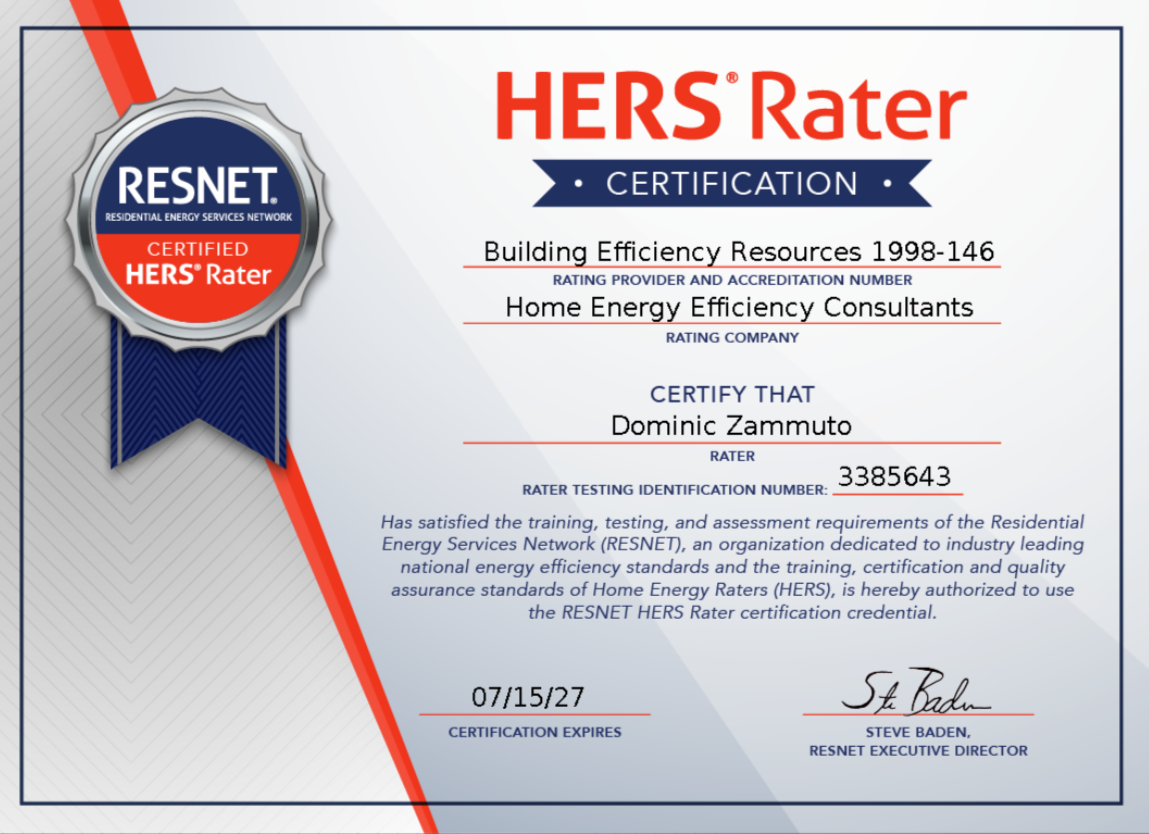
RESNET-certified · 15,000+ ratings completed · 5.0 stars across 135 Google reviews · (617) 501-6788
Blower Door Testing Huntington MA
Certified blower door testing in Huntington - we measure your home's air-tightness in ACH50, pinpoint leaks, and document a passing result for your building permit.
Air-tightness at a glance
Blower Door Testing Huntington MA
A blower door test is the code-required way to prove how airtight a home in Huntington really is. A calibrated fan depressurizes the house to 50 Pascals so we can measure exactly how much air leaks through the envelope, reported as air changes per hour (ACH50). New construction must reach 3.0 ACH50 or lower, while remodels are allowed up to 5.0 ACH50.
| Project type | Max ACH50 | Notes |
|---|---|---|
| New construction | 3.0 or lower | Mandatory blower-door test under R402.4.1.2 |
| Remodel / alteration | 5.0 | Realistic target for existing assemblies |
| Addition < 1,000 sq ft | Exempt* | May be exempt from testing (R502.3.1) |
| Passive House / Specialized | 0.6 | Whole-building test, Phius/PHI protocol |
*Confirm with your local building department. Requirements per the 2025 MA Stretch Energy Code Technical Guidance.
How Blower Door Testing Works in Huntington
The fan mounts in an exterior doorway and holds the home at a fixed 50-Pascal pressure difference - about what a 20 mph wind would exert. The airflow required to maintain that pressure, in CFM, converts to ACH50 using the home's conditioned volume.
The code converts the result to Q50 (CFM at 50 Pa) with Q50 = (Volume × ACH50) ÷ 60. A 2,700 sq ft home at 2 ACH50 works out to roughly 810 CFM50.
Keeping Heat In During Huntington Cold Spells
Air-leakage heat loss grows with the gap between indoor and outdoor temperature, which is why a drafty home feels worst in a deep freeze. Warm air you have paid to heat escapes high, cold air rushes in low, and the heating system ends up chasing a load that keeps climbing as the temperature drops.
Once the leaks are found and sealed, the home retains heat far longer between heating cycles. Floors stay warmer, temperatures hold steady on windy nights, and the reduced heating load shows up directly on winter utility bills.
Lower heating load
Less infiltration means a smaller winter heat-loss load and equipment that can keep up.
Retain paid-for heat
Warm air stays in the living space instead of escaping out the top of the house.
Steadier comfort
Fewer cold-floor drafts and a temperature that holds between heating cycles.
Where Huntington Homes Leak Air
During depressurization the leaks are exaggerated, making them easy to find. In Hampshire County's older housing stock the usual suspects are rim joists, top plates, attic hatches, recessed lights, and penetrations for plumbing and wiring. Coastal and exposed sites feel wind-driven infiltration most, so a tight, verified envelope pays back quickly here.
Best Fit for Projects Like
- Drafty existing homes seeking targeted air sealing
- Custom and high-performance builds
- Additions over 1,000 sq ft that trigger testing
- Gut renovations and deep-energy retrofits
- Certificate-of-occupancy sign-off
Blower Door Testing Huntington MA Facts
When the test happens
The blower door test is typically run near completion, once the air barrier, windows, and penetrations are sealed but while any needed corrections are still easy to make.
Smaller design heating load
Because infiltration is a major line in the winter heat-loss calculation, verifying tightness lets a designer lower the design heating load and right-size equipment.
Air leakage and heating cost
Uncontrolled air leakage can raise a home's heating and cooling costs by 30% or more, which is why the code treats envelope tightness as a mandatory measure.
The ACH50 metric
Results are reported as ACH50 - air changes per hour at 50 Pascals. It tells you how many times per hour the home's entire volume of air would be replaced under that test pressure.
Trusted for Blower Door Testing Huntington MA
When I was going to pull my building permit I was confused about documentation to meet the Massachusetts stretch energy code, but Home Energy was extremely helpful in explaining the HERS rating process and helping me apply for Mass Save rebates.
One of the most reliable companies that I've worked with in Somerville, Massachusetts.
As a builder, I need accurate and dependable HERS ratings to keep projects on track. This company never disappoints. Always on time, always professional.
Our Massachusetts Service Locations
Serving clients from our Massachusetts locations in Everett, Somerville, and Framingham.
Everett Location
371 Main St
Everett, MA 02149
Somerville Location
519 Broadway
Somerville, MA 02145
Framingham Location
68 South St
Framingham, MA 01702
FAQ About Blower Door Testing Huntington MA
What is a blower door test?
It is a diagnostic that measures how airtight a building is. A calibrated fan mounted in a doorway pressurizes or depressurizes the home to 50 Pascals and measures the airflow needed to hold that pressure, which is reported as ACH50.
How is ACH50 converted to CFM?
The code uses Q50 = (conditioned volume x ACH50) / 60. For example, a 2,700 sq ft home with 9 ft ceilings at 2 ACH50 equals about 810 CFM50.
Can a blower door test find where my home is drafty?
Yes. Depressurizing the home exaggerates the leaks so a rater can pinpoint exactly where outdoor air is entering, which guides targeted air sealing.
What ACH50 does new construction need to pass?
New residential construction in Massachusetts must measure 3.0 ACH50 or lower. Many high-performance homes come in well below that figure.
What documentation do I receive?
You receive the measured ACH50 result on a RESNET/HERS-style report suitable for the building department, plus notes on any sealing performed.
Do additions need a blower door test?
Many do, but additions under 1,000 square feet can be exempt from air-leakage testing under R502.3.1. We can confirm what your specific project requires.
Get Started With Blower Door Testing Huntington MA
Book a certified blower door test and get a permit-ready air-tightness report. Call 617-501-6788.
HERS Ratings in Huntington, Massachusetts
Home Energy Efficiency Consultants provides Huntington with certified HERS ratings, blower door and duct leakage testing, and Massachusetts energy-code compliance for new construction, additions, and major renovations — with same-day preliminary reports.
We rate homes across the Commonwealth from our four offices. Reach the one nearest your Huntington project — Somerville, Framingham, Marlborough, or Everett — or call (617) 501-6788 to schedule a Huntington rating.
More Massachusetts Towns We Serve
Certified HERS ratings, blower door testing and energy code compliance across all 351 Massachusetts cities and towns.