Blower Door Testing Norwood MA - Quick Facts
Local energy code in Norwood
- Norwood adopted the Massachusetts Specialized (Opt-In) Energy Code effective July 1, 2024; the Stretch Code applies as the baseline. IECC Climate Zone 5A.
- Beyond the Stretch baseline, new mixed-fuel homes must be pre-wired for future electrification and add on-site solar where there is significant unshaded roof space.
- All-electric new homes must use heat pumps for space heating and hot water; fossil-fuel homes over 4,000 sq ft must reach net-zero (HERS 0), and new multifamily over 12,000 sq ft must meet Passive House.
Blower door requirement in Norwood
- New homes in Norwood must test at 3.0 ACH50 or tighter under the Massachusetts Stretch Code (Specialized Code town).
- Air-leakage testing is mandatory, measured with a calibrated blower-door fan to the RESNET / ASTM protocol - there is no inspection-only substitute for the result.
- Companion duct leakage limit: 4.0 CFM25 per 100 sq ft of conditioned floor area total leakage (8.0 when all ducts are inside conditioned space - the test is still required).
- Same-day preliminary results; final report in 24-48 hours, filed with the Norwood building department.
2026 Mass Save incentives in Norwood
- A tight result unlocks Mass Save all-electric incentives ($7,500 to $25,000 per new single-family home); an all-electric renovation testing at 3.0 ACH50 or better reaches the Level 2 tier, up to $30,000.
- Incentives require a Mass Save-approved, RESNET-certified HERS rater.
RESNET-certified · 15,000+ ratings completed · 5.0 stars across 136 Google reviews · (617) 501-6788
Blower Door Testing Norwood MA
Certified blower door testing in Norwood - we measure your home's air-tightness in ACH50, pinpoint leaks, and document a passing result for your building permit.
Air-tightness at a glance
Blower Door Testing Norwood MA
A blower door test is the code-required way to prove how airtight a home in Norwood really is. A calibrated fan depressurizes the house to 50 Pascals so we can measure exactly how much air leaks through the envelope, reported as air changes per hour (ACH50). New construction must reach 3.0 ACH50 or lower, and no home on any compliance path may exceed 5.0 ACH50 (IECC 2021 R402.4.1.2).
| Project type | Max ACH50 | Notes |
|---|---|---|
| New construction | 3.0 or lower | Mandatory blower-door test under R402.4.1.2 |
| Maximum on any compliance path | 5.0 | Code cap under IECC 2021 R402.4.1.2 |
| Addition < 1,000 sq ft | Exempt* | May be exempt from testing (R502.3.1) |
| Passive House (PHI; Phius uses 0.06 CFM50/sq ft) | 0.6 | Whole-building test, Phius/PHI protocol |
*Confirm with your local building department. Requirements per the 2025 MA Stretch Energy Code Technical Guidance.
How Blower Door Testing Works in Norwood
The fan mounts in an exterior doorway and holds the home at a fixed 50-Pascal pressure difference - about what a 20 mph wind would exert. The airflow required to maintain that pressure, in CFM, converts to ACH50 using the home's conditioned volume.
The code converts the result to Q50 (CFM at 50 Pa) with Q50 = (Volume × ACH50) ÷ 60. A 2,700 sq ft home at 2 ACH50 works out to roughly 810 CFM50.
Keeping Heat In During Norwood Cold Spells
In winter the biggest enemy of a warm home is often invisible air movement. The stack effect drives heated air out through the top of the envelope and draws frigid air in near the floor, robbing heat all season - Cornell extension research describes it plainly as the effect that steals warmth from your home every winter.
A tight, tested envelope shrinks the infiltration share of your heating load. That lets the equipment keep up during cold spells, holds rooms at a steadier temperature between cycles, and often lets a designer right-size the heating system rather than oversizing it to cover leakage.
Lower heating load
Less infiltration means a smaller winter heat-loss load and equipment that can keep up.
Retain paid-for heat
Warm air stays in the living space instead of escaping out the top of the house.
Steadier comfort
Fewer cold-floor drafts and a temperature that holds between heating cycles.
Where Norwood Homes Leak Air
During depressurization the leaks are exaggerated, making them easy to find. In Norfolk County's older housing stock the usual suspects are rim joists, top plates, attic hatches, recessed lights, and penetrations for plumbing and wiring. Coastal and exposed sites feel wind-driven infiltration most, so a tight, verified envelope pays back quickly here.
Best Fit for Projects Like
- Multi-family and townhouse units
- Mass Save incentive and rebate projects
- New single-family homes needing a code compliance test
- Custom and high-performance builds
- Certificate-of-occupancy sign-off
Blower Door Testing Norwood MA Facts
Documentation for permits
Passing results are recorded on a RESNET/HERS-style form that becomes part of the building permit and certificate of occupancy file.
The winter stack effect
In cold weather warm indoor air rises and escapes near the top of the house, pulling cold air in down low. The colder the spell, the stronger this stack effect - and the more heat a leaky home loses.
Smaller design heating load
Because infiltration is a major line in the winter heat-loss calculation, verifying tightness lets a designer lower the design heating load and right-size equipment.
Passive House airtightness
On the Specialized Code / Passive House path, whole-building airtightness follows Phius or PHI protocols - often around 0.6 ACH50, roughly ten times tighter than base code.
Trusted for Blower Door Testing Norwood MA
Had a pleasure working with Dom. Everything in the building turned out great and air tight for the coming winter.
Five stars isn't enough. The team at Home Energy Efficiency Consultants LLC goes above and beyond every time. They're the gold standard for HERS ratings in Massachusetts.
As a builder, I need accurate and dependable HERS ratings to keep projects on track. This company never disappoints. Always on time, always professional.
Our Massachusetts Service Locations
Serving clients from our Massachusetts locations in Everett, Somerville, and Framingham.
Everett Location
371 Main St
Everett, MA 02149
Somerville Location
519 Broadway
Somerville, MA 02145
Framingham Location
68 South St
Framingham, MA 01702
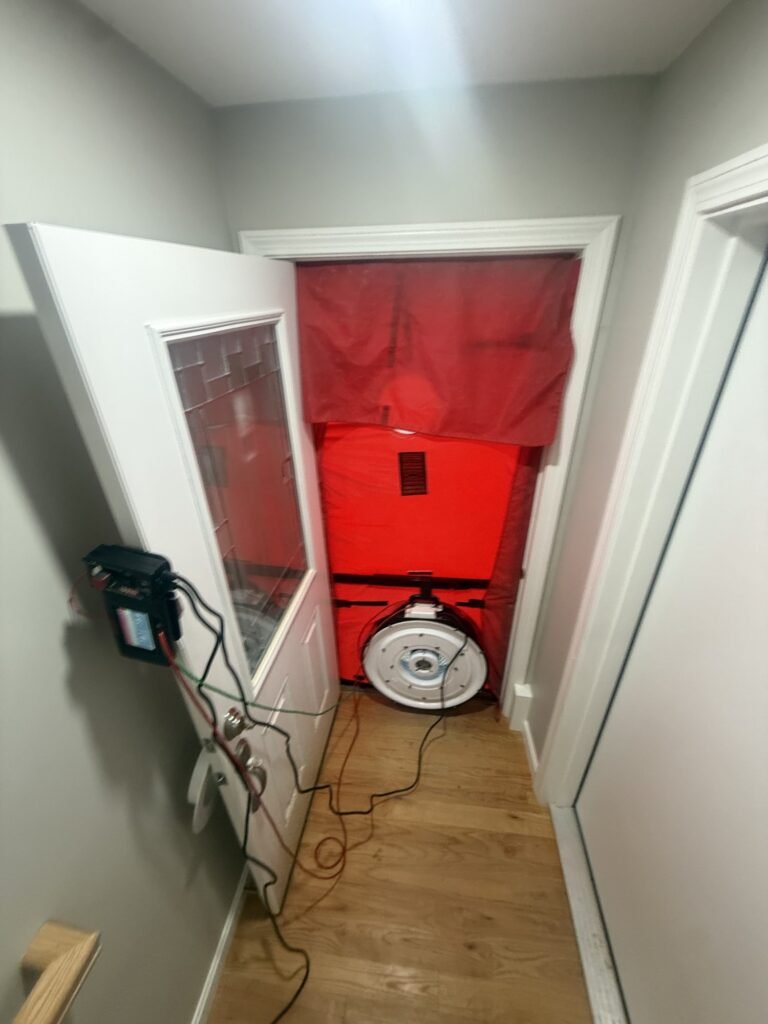
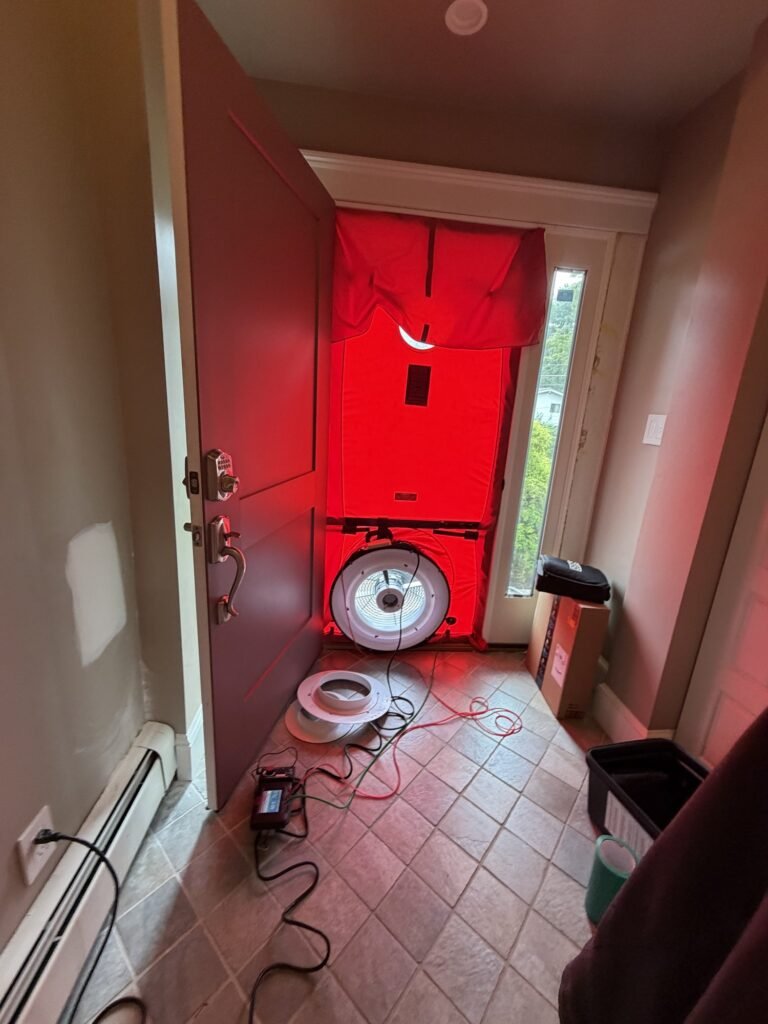
Real blower door tests by HEEC for Norwood projects
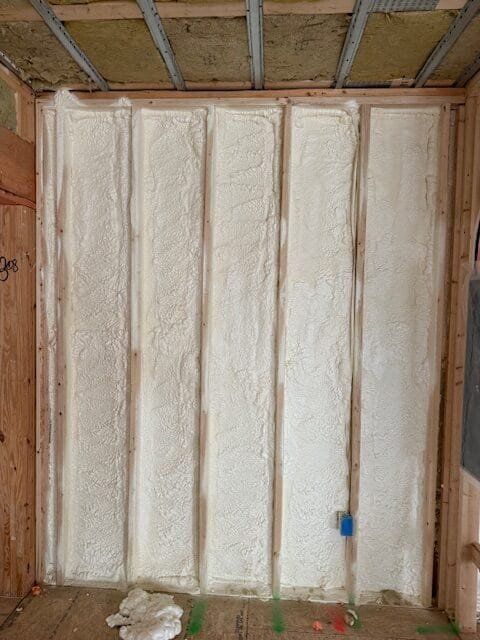
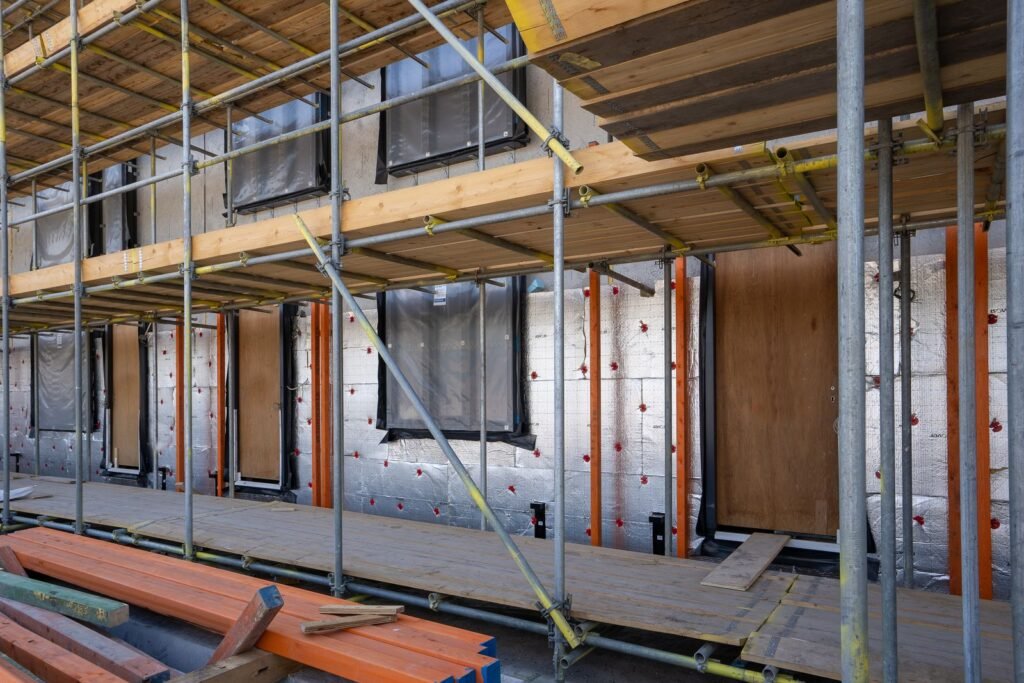
These are photos from Home Energy Efficiency Consultants blower door testing jobs in Massachusetts — the same equipment and setup our certified raters bring to Norwood homes.
FAQ About Blower Door Testing Norwood MA
Will sealing my home cause moisture problems?
No - controlled tightness plus proper ventilation actually reduces moisture problems, because you stop humid air from moving through and condensing inside assemblies.
What ACH50 does new construction need to pass?
New residential construction in Massachusetts must measure 3.0 ACH50 or lower. Many high-performance homes come in well below that figure.
How is ACH50 converted to CFM?
The code uses Q50 = (conditioned volume x ACH50) / 60. For example, a 2,700 sq ft home with 9 ft ceilings at 2 ACH50 equals about 810 CFM50.
Do additions need a blower door test?
Many do, but additions under 1,000 square feet can be exempt from air-leakage testing under R502.3.1. We can confirm what your specific project requires.
What does the 50 Pascal test pressure represent?
Fifty Pascals is roughly the pressure a 20 mph wind exerts on the whole building. Testing at a fixed pressure makes the result repeatable regardless of the weather that day.
Will a tighter home lower my heating load?
Yes. Infiltration is one of the largest parts of a winter heat-loss calculation. Reducing leakage directly shrinks the heating load, which can mean right-sized equipment, lower bills, and a home that holds temperature better in cold weather.
Blower Door Test Requirements for Norwood Projects
Norwood is one of the 60 Massachusetts communities on the Specialized (Opt-In) Code. New homes there are built on the same 225 CMR 22.00 testing requirements below, plus net-zero-ready provisions.
| Requirement | Limit | Source |
|---|---|---|
| New home, prescriptive path | 3.0 ACH50 or lower | IECC 2021 R402.4.1.3 (Climate Zone 5, all of Massachusetts) |
| Maximum on any compliance path | 5.0 ACH50 or 0.28 CFM50 per sq ft of enclosure | IECC 2021 R402.4.1.2 |
| Attached homes and apartments tested unit by unit | 0.30 CFM50 per sq ft of unit enclosure (alternative) | IECC 2021 R402.4.1.2 exception |
| Mass Save ENERGY STAR tier | 1.5 ACH50 or lower | Mass Save new construction program |
| Passive House (PHI) | 0.6 ACH50 or lower | Passive House Institute |
| Passive House (Phius) | 0.06 CFM50 per sq ft of enclosure (0.08 for non-combustible 5+ stories) | Phius 2024 Certification Guidebook |
How the house is set up for the test
- Exterior windows and doors closed, with no sealing beyond normal weatherstripping
- Dampers closed but not taped, and interior doors open
- Exterior ventilation openings sealed, heating and cooling turned off, supply and return registers open
- Tested at 50 Pascals per ANSI/RESNET/ICC 380, ASTM E779 or ASTM E1827, with a signed report for the Norwood building department
Sources: 225 CMR 22.00 (2025 edition) and the 2021 IECC sections listed. Norwood is in Norfolk County, served from our Framingham (68 South St) office.
Blower Door Questions from Norwood Builders
What blower door number does a new home in Norwood need?
On the prescriptive path the 2021 IECC requires 3.0 ACH50 or lower in Massachusetts, and no home on any path may exceed 5.0 ACH50. Homes on the HERS path are tested the same way, and the result goes into the HERS model, so a tighter house earns a lower HERS score.
What is ACH50?
Air changes per hour at 50 Pascals: how many times the home's air volume leaks out each hour while a blower door holds the house at 50 Pa. ACH50 = CFM50 × 60 ÷ conditioned volume.
How are townhouses and apartments tested?
Each dwelling unit can be tested on its own and meet 0.30 CFM50 per square foot of the unit's enclosure, which counts walls, floor and ceiling shared with neighbors. Large buildings may also get a whole-building test.
What gets taped or closed during the test?
Windows and exterior doors are closed, dampers are closed but not sealed, and exterior ventilation openings such as bath fan and ERV/HRV terminations are sealed. Interior doors stay open and the heating and cooling system is off.
When should the blower door test happen?
The code test happens at the end of construction. We recommend a pre-drywall test once the air barrier is complete, when leaks are cheap to find and fix, so the final test is a formality.
How much does blower door testing cost in Norwood?
Pricing depends on the size of the building and the number of units. Send your plans or address and we will quote the test, or bundle it with your HERS rating and duct test in one visit.
Related: Duct leakage testing in Norwood · HERS rating in Norwood · Stretch Code help in Norwood
Get Started With Blower Door Testing Norwood MA
Book a certified blower door test and get a permit-ready air-tightness report. Call 617-501-6788.

Mass Save®-Listed HERS Rater
 U.S. DOE Efficient New Home
Trusted Partner — Verified
 ENERGY STAR®
Partner
 Phius Certified
Passive House Verifier
 ICC
Member★★★★★136 Google
Reviews
The Phius Certified Verifier logo is used under license from Phius.
Last updated · Home Energy Efficiency Consultants, RESNET-certified HERS raters
HERS Ratings Across Norwood and Nearby Communities
Home Energy Efficiency Consultants rates new homes, additions, and major renovations throughout Norwood — including Norwood Center, South Norwood, and Norwood Depot. Every Norwood project is filed with the Town of Norwood Building Department, and we handle the energy model, blower door and duct leakage testing, and the compliance paperwork from start to finish.
We also serve the communities right around Norwood, including Walpole, Westwood, Dedham, Canton, and Sharon. Our Framingham office at 68 South St is the closest of our four Massachusetts locations — see our Framingham office or call (617) 501-6788 to get a Norwood rating on the schedule.
Norwood Specialized Energy Code — HERS Index Targets
Norwood enforces the Massachusetts Specialized (Opt-In) Energy Code. The required HERS score depends on fuel type and project scope — a lower index is stricter.
| Project type | Mixed-fuel | Mixed-fuel + solar | All-electric | All-electric + solar |
|---|---|---|---|---|
| New construction | HERS 42 | 42 | 45 | 45 |
| New construction — embodied-carbon credit | 45 | 45 | 48 | 48 |
| Accessory dwelling unit (ADU) | 52 | 55 | 55 | 58 |
| Major alteration / renovation / change of use | 65 | 70 | 70 | 75 |
A HERS rating is triggered by new construction, additions over 1,000 sq ft (or more than 100% of the existing conditioned area), and Level 3 alterations over 1,000 sq ft affecting more than 50% of the home. New homes must also pass a blower-door test at 3.0 ACH50 and include electrification-ready wiring for heat pumps, EV charging, and solar. We model your Norwood project up front so you know the exact target and the fastest path to hit it — call (617) 501-6788.
More Massachusetts Towns We Serve
Certified HERS ratings, blower door testing and energy code compliance across all 351 Massachusetts cities and towns.